

When it comes to automotive safety, Volvo has consistently set the standard for decades. While most drivers are familiar with basic safety elements like seatbelts (which Volvo pioneered with the three-point design) and airbags, today’s Volvo vehicles incorporate sophisticated technologies that actively work to prevent accidents before they happen. These advanced systems represent the culmination of Volvo’s Vision 2020 initiative—their ambitious goal that no one should be killed or seriously injured in a new Volvo car. Let’s explore the cutting-edge safety features that make modern Volvos some of the most secure vehicles on the road today.
Volvo’s Safety Philosophy: Prevention First
Volvo’s approach to safety has evolved from passive protection (keeping occupants safe during a crash) to active prevention (avoiding accidents altogether). This shift reflects the brand’s understanding that the best way to survive a collision is to prevent it from happening in the first place.
The company’s safety engineers work from a comprehensive database of real-world accident data, collected since the 1970s. This invaluable resource allows them to identify the most common accident scenarios and develop technologies specifically designed to address these situations. Through their E.V.A. (Equal Vehicles for All) Initiative, Volvo has even made this data freely available to other manufacturers—demonstrating their commitment to improving safety across the entire automotive industry.
“Our vision is that no one should be killed or seriously injured in a new Volvo car. Everything we do is designed around people, so every innovation we make is designed to protect them.”
City Safety: Volvo’s Comprehensive Collision Avoidance System
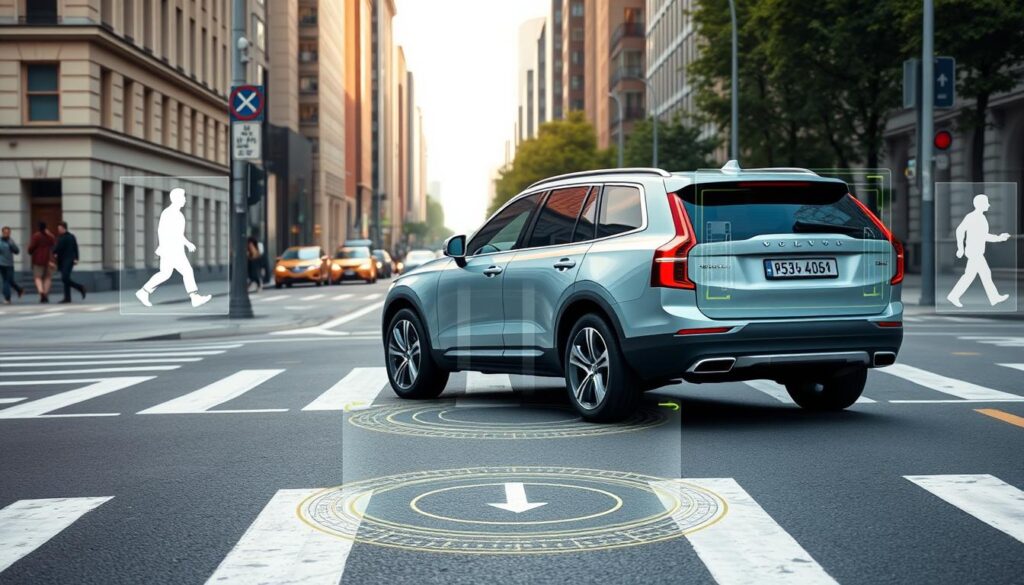
At the heart of Volvo’s preventive safety technology is City Safety—a comprehensive collision avoidance system that comes standard on all new Volvo models. This intelligent system uses a combination of cameras and radar sensors to constantly monitor the road ahead and can detect various potential hazards:
- Other vehicles (stationary or moving)
- Pedestrians
- Cyclists
- Large animals (like deer or moose)
When City Safety detects an imminent collision, it follows a three-step process:
- First, it alerts the driver with visual and audible warnings
- If no action is taken, it provides brake support to assist the driver’s braking
- If the driver still doesn’t respond, it automatically applies full braking force
In real-world scenarios, City Safety has proven remarkably effective. For example, when a pedestrian suddenly steps into the road from between parked cars, the system can detect this movement faster than most human drivers and begin braking within milliseconds. At speeds up to 30 mph, City Safety can completely avoid a collision; at higher speeds, it significantly reduces impact severity.
Pilot Assist: Semi-Autonomous Driving for Safer Journeys
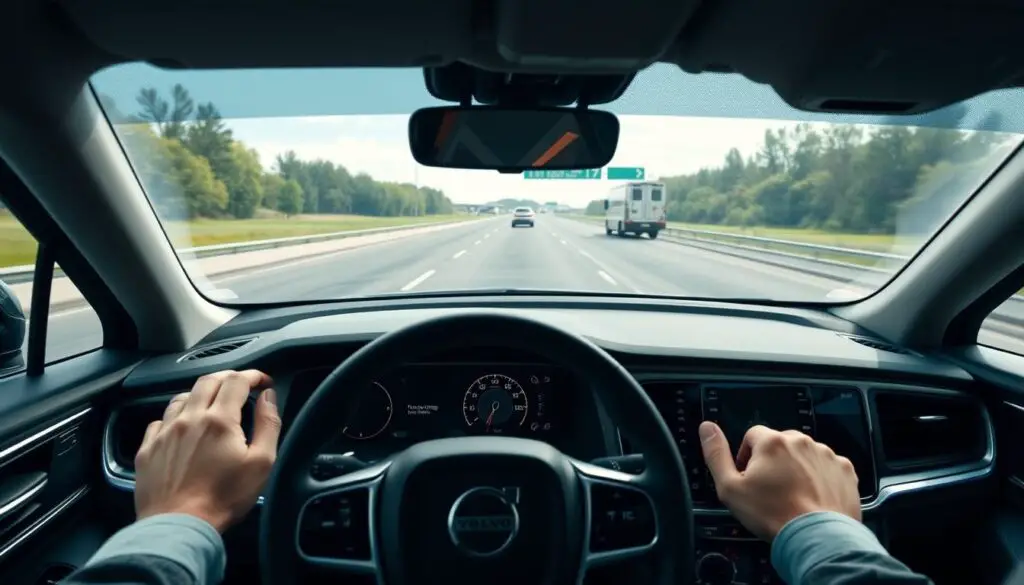
Volvo’s Pilot Assist represents a significant step toward autonomous driving, combining adaptive cruise control with steering assistance to reduce driver fatigue and enhance safety on longer journeys. The system works at speeds up to 80 mph and helps the driver maintain a set speed and distance from the vehicle ahead while providing gentle steering inputs to keep the car centered in its lane.
Unlike fully autonomous systems, Pilot Assist requires the driver to remain engaged and keep their hands on the steering wheel. If the system detects that the driver has removed their hands for too long, it issues a series of increasingly urgent warnings before deactivating.
In daily driving scenarios, Pilot Assist proves particularly valuable during highway commutes. Imagine you’re driving on a congested interstate during rush hour—Pilot Assist helps maintain a safe distance from the car ahead, adjusting speed automatically as traffic flow changes. Meanwhile, the steering assistance reduces the small but constant corrections typically needed to stay centered in your lane, significantly reducing driver fatigue.
Did you know? Pilot Assist can now recognize and respond to traffic signs, adjusting your speed automatically when entering a lower speed zone.
Run-off Road Mitigation and Protection
Run-off road accidents account for a significant percentage of serious injuries and fatalities. Volvo addresses this risk with two complementary systems: Run-off Road Mitigation and Run-off Road Protection.
Run-off Road Mitigation
This preventive system works between 40-87 mph to detect if the car is about to leave the road unintentionally. Using camera technology to monitor the road edges, it can automatically apply steering input (and braking if necessary) to guide the vehicle back onto the road.
For example, if you’re driving on a rural highway and momentarily lose focus, allowing the car to drift toward the shoulder, Run-off Road Mitigation will detect this deviation and gently steer the vehicle back into its lane—often before you even realize you’ve strayed.
Run-off Road Protection
If a road departure is unavoidable, this system prepares the vehicle and occupants for impact. The front safety belts automatically tighten to keep occupants in the optimal position, while the energy-absorbing seats are designed to cushion the vertical forces that can cause spinal injuries in off-road landings.
Consider a scenario where a driver swerves to avoid an animal and cannot prevent leaving the roadway—Run-off Road Protection immediately tightens seatbelts and prepares the specially designed seats to absorb the vertical impact, significantly reducing the risk of spinal injuries.
BLIS and Cross Traffic Alert: Eliminating Blind Spots
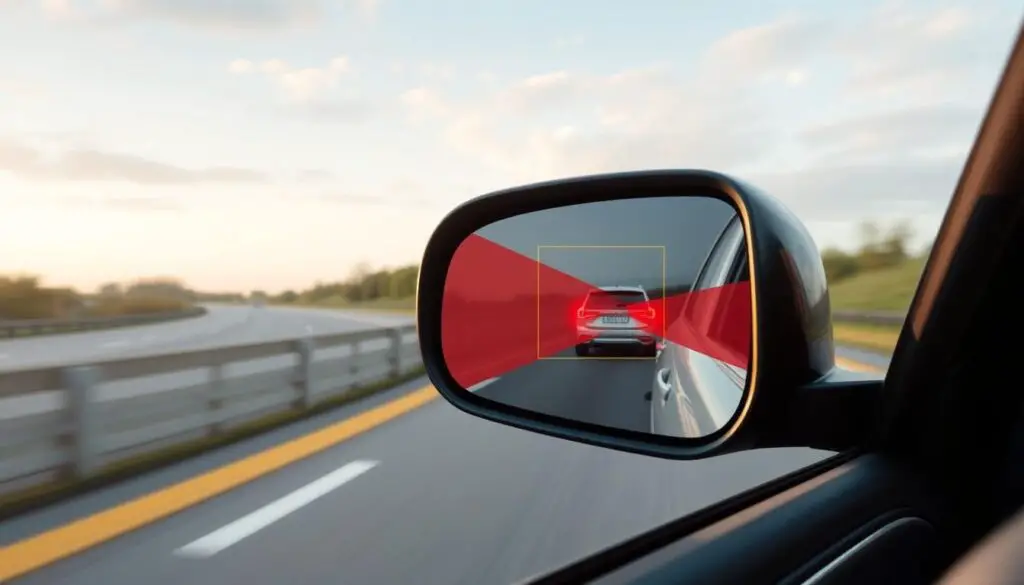
Changing lanes and backing out of parking spaces are two common scenarios where limited visibility can lead to accidents. Volvo addresses these challenges with two sophisticated systems.
Blind Spot Information System (BLIS)
BLIS uses radar sensors to monitor the areas beside and behind your vehicle—spaces that are often difficult to see even with properly adjusted mirrors. When another vehicle enters your blind spot, a warning light illuminates near the appropriate side mirror, alerting you to its presence.
In real-world driving, BLIS proves invaluable during lane changes on busy highways. As you signal to change lanes, the system provides an additional layer of awareness, helping prevent potential collisions with vehicles you might not have spotted.
Cross Traffic Alert with Auto Brake
This system activates when you’re reversing out of a parking space, using radar sensors to detect vehicles approaching from either side—areas that are often completely obscured until you’ve already backed partway out. The system provides warnings and, if necessary, can apply the brakes automatically to avoid a collision.
Imagine backing out of a space in a busy shopping center parking lot, where tall SUVs on either side block your view of approaching traffic. Cross Traffic Alert detects vehicles moving in your path before you can see them, warning you to stop or, if needed, stopping the car automatically.
Whiplash Protection System (WHIPS): Protecting Your Spine
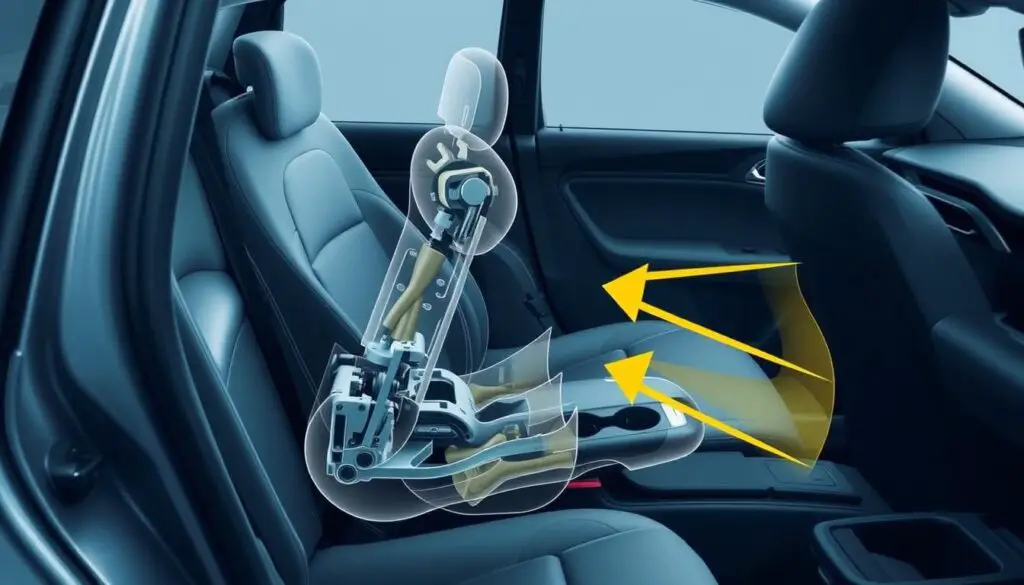
While many of Volvo’s safety innovations focus on preventing accidents, the company hasn’t neglected protection during collisions. Rear-end impacts are particularly common in urban traffic and often result in whiplash injuries—painful and potentially long-lasting neck trauma caused by the sudden forward-backward movement of the head.
Volvo’s Whiplash Protection System (WHIPS) addresses this specific injury risk through an ingenious seat design. In the event of a rear-end collision, the entire seatback moves in a carefully controlled manner, cradling the occupant’s body and reducing the relative movement between the head and torso that causes whiplash.
The system works by allowing the seatback to move backward with the occupant’s body, absorbing energy while maintaining support for the spine. This controlled movement significantly reduces the acceleration forces on the neck and spine, lowering the risk of injury.
In practical terms, if your Volvo is struck from behind while waiting at a traffic light, WHIPS activates instantly, moving with your body to minimize the whipping motion of your head and neck. This technology has proven so effective that it’s reduced whiplash injury claims by approximately 50% in Volvo vehicles equipped with the system.
Protective Structural Design: The Safety Cage Concept
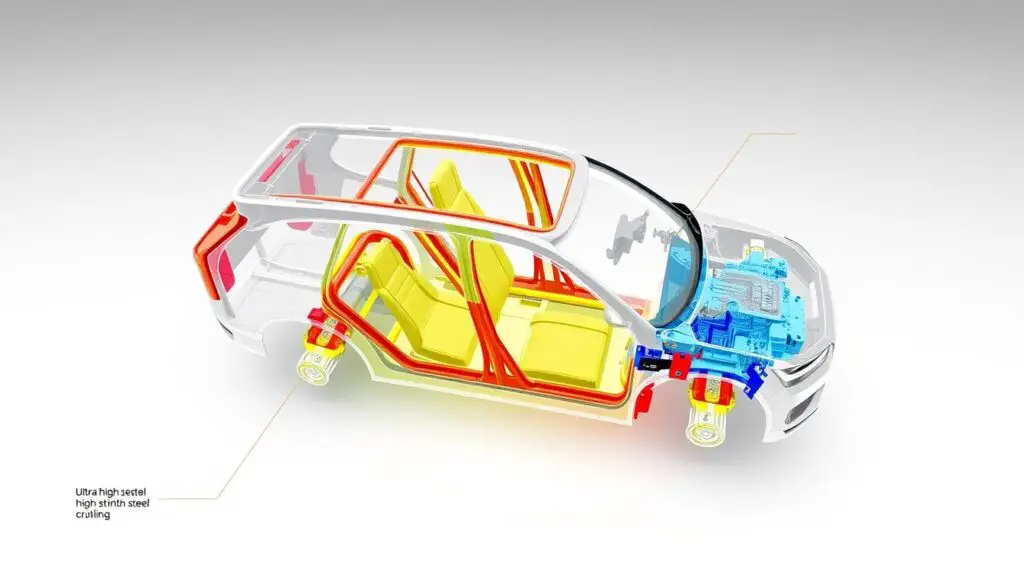
The foundation of Volvo’s safety philosophy lies in the vehicle’s physical structure—specifically, its safety cage design. Modern Volvos feature a passenger compartment constructed from ultra-high-strength boron steel, forming a protective cell around the occupants. This rigid safety cage is complemented by strategically designed crumple zones at the front and rear of the vehicle.
Safety Cage Benefits
- Ultra-high-strength boron steel is up to five times stronger than conventional steel
- Maintains cabin integrity during severe impacts
- Distributes collision forces away from the passenger compartment
- Designed to protect all occupants, regardless of size or seating position
Traditional Design Limitations
- Conventional steel structures can deform into the passenger space
- Uneven force distribution can increase injury risk
- Limited protection in multiple-impact scenarios
- Often optimized for standard crash tests rather than real-world accidents
In a frontal collision, the crumple zones progressively deform, absorbing and dissipating crash energy before it reaches the passenger compartment. Meanwhile, the rigid safety cage remains intact, preserving the survival space for occupants. This combination of strength and controlled deformation represents decades of crash research and engineering refinement.
Volvo’s structural design also accounts for side impacts—often the most dangerous due to the limited crumple zone available. Reinforced door beams, specially designed B-pillars, and the cross-member architecture all work together to distribute side impact forces across the entire structure rather than allowing localized intrusion into the cabin.
How Volvo Safety Features Work Together: An Integrated Approach
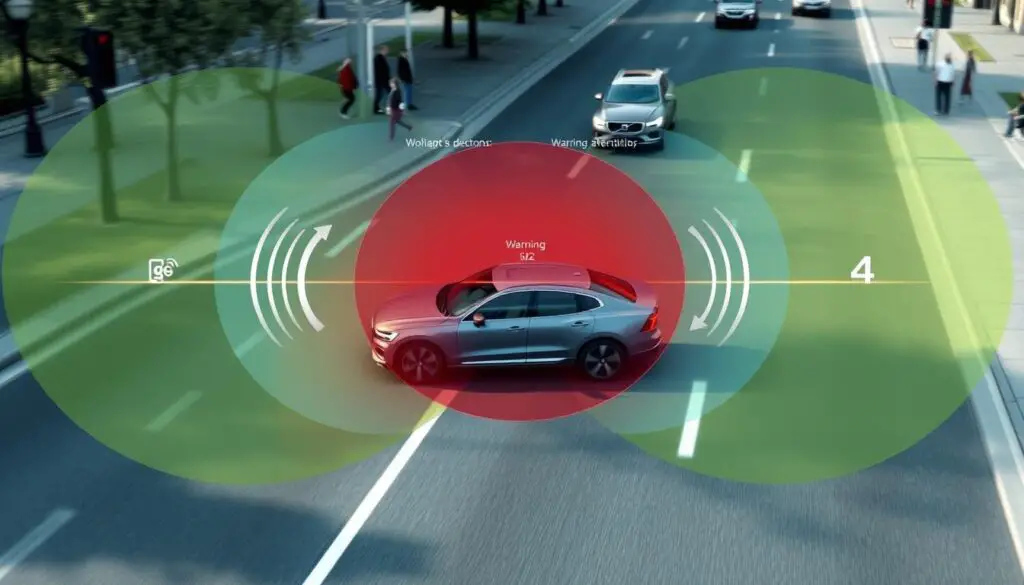
What truly sets Volvo’s safety approach apart is how these various systems work together as an integrated whole. Rather than functioning as isolated features, Volvo’s safety technologies communicate with each other, creating multiple layers of protection.
Consider this real-world scenario: You’re driving on a rainy highway when the vehicle ahead suddenly brakes. Multiple Volvo safety systems activate in sequence:
- City Safety detects the slowing vehicle and issues a warning
- If you don’t respond quickly enough, automatic braking initiates
- Simultaneously, the seatbelts pre-tighten to prepare for a possible impact
- If a collision is unavoidable, the system prepares airbags for deployment
- After impact, Post-Collision Braking automatically applies the brakes to prevent secondary collisions
This coordinated response happens within fractions of a second, with each system playing its role in a carefully orchestrated sequence. The result is a comprehensive safety envelope that works to prevent accidents when possible and minimize injuries when prevention isn’t enough.
The Real-World Impact: Volvo Safety Features in Action
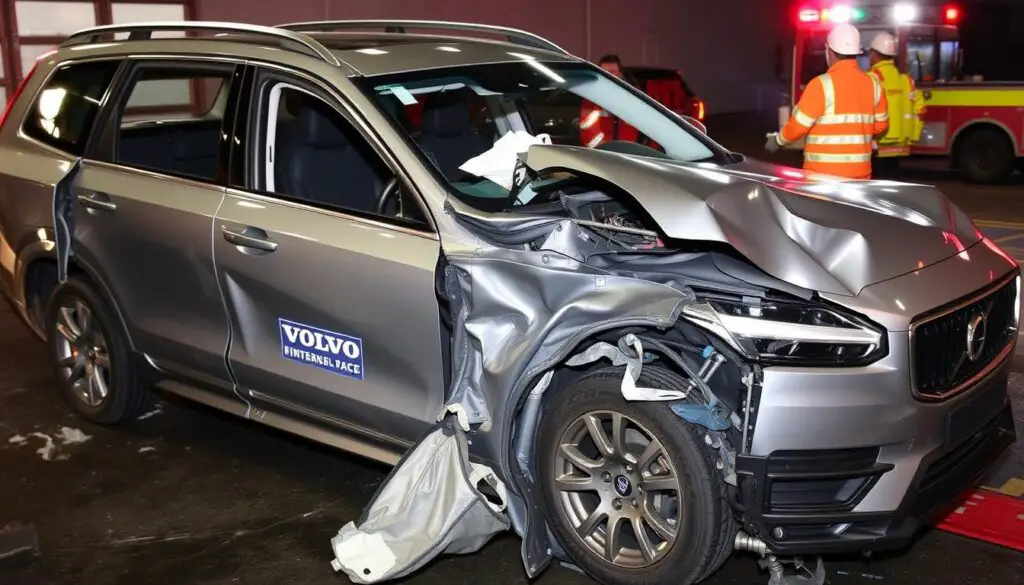
Beyond laboratory testing and engineering specifications, Volvo’s safety innovations have demonstrated remarkable effectiveness in real-world conditions. The Volvo Cars Accident Research Team has documented numerous cases where these systems have prevented accidents or significantly reduced injury severity.
“I was driving home in heavy rain when a deer suddenly jumped into the road. Before I could even react, my XC60’s City Safety system had already applied the brakes. We stopped just inches from the animal. Without that system, I’m certain we would have collided.”
Insurance data supports these anecdotal accounts. Vehicles equipped with Volvo’s complete safety package show significantly lower rates of at-fault accidents and injury claims compared to similar vehicles without these features. The Swedish Insurance Association has reported that Volvo models with City Safety show approximately 28% fewer bodily injury claims than comparable vehicles.
Perhaps most telling is the existence of the “Volvo Saved My Life Club”—an informal group of Volvo owners who credit their vehicles’ safety features with preventing serious injury or death in severe accidents. Their testimonials provide powerful evidence of how engineering innovations translate into real human impact.
The Future of Volvo Safety: What’s Next?
Volvo continues to push the boundaries of automotive safety with several promising technologies currently in development:
- Advanced Driver Monitoring – Using cameras to detect driver distraction, drowsiness, or impairment and intervene when necessary
- LiDAR Integration – Adding light detection and ranging sensors to provide even more precise environmental mapping
- Connected Safety – Allowing Volvo vehicles to communicate with each other and infrastructure about road hazards
- Advanced Autonomous Driving – Building on Pilot Assist toward more comprehensive self-driving capabilities
- AI-Enhanced Prediction – Using artificial intelligence to better predict the behavior of other road users
These innovations reflect Volvo’s understanding that safety technology must continually evolve to address new challenges and opportunities. As vehicles become more connected and autonomous, Volvo remains committed to its founding principle: that cars should be designed around people and their safety needs.
Conclusion: The Volvo Safety Difference
Volvo’s comprehensive approach to safety—combining accident prevention, occupant protection, and post-collision mitigation—has established the brand as a perennial leader in automotive safety. From the three-point seatbelt to today’s sophisticated network of sensors and automated systems, Volvo has consistently prioritized human wellbeing above all else.
What makes Volvo’s safety philosophy particularly compelling is its holistic nature. Rather than focusing solely on passing standardized crash tests, Volvo engineers study real-world accidents and design solutions for the complex scenarios drivers actually encounter. This approach has resulted in vehicles that not only earn top safety ratings but also demonstrate exceptional performance in unpredictable real-world conditions.
As automotive technology continues to evolve, Volvo’s unwavering commitment to safety innovation ensures that its vehicles will continue to offer peace of mind for drivers and passengers alike. In a Volvo, safety isn’t just a feature—it’s the fundamental principle around which everything else is designed.