

In 1959, Volvo engineer Nils Bohlin introduced a design that set a new baseline for occupant protection. He left the patent open so all makers could use it. That choice helped spread a simple, effective belt across many car models.
The single strap that crosses shoulder and lap replaced older systems and cut fatal crashes. Experts credit this design with saving more than one million lives worldwide and lowering injury severity for millions more.
While cars now carry this device as standard, gaps remain in some vehicle categories and usage patterns today. That uneven spread matters for public health and ongoing regulation.
Key Takeaways
- Nils Bohlin designed a durable belt in 1959 and shared the patent freely.
- The belt design saved over one million lives worldwide and cut severe injuries.
- Adoption reshaped car design, engineering rules, and U.S. policy over decades.
- Wider use required laws, enforcement, and a culture change toward buckling up.
- Some vehicle types still lag, so risk and outreach remain important today.
From a breakthrough design to a global safety system: what changed in 1959
A single, continuous strap changed how forces moved through a passenger’s body during a crash. Bohlin’s design secured both shoulder and lap with one restraint and spread impact loads across stronger skeletal regions.
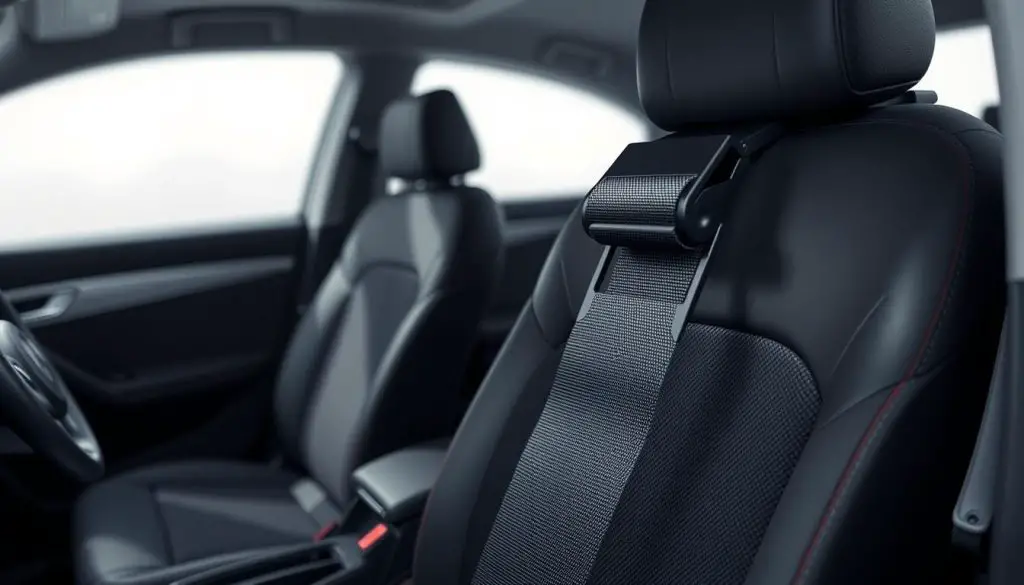
What problem did it solve? Earlier lap-only restraints let the torso pivot forward in severe impacts. That motion put extreme load on the chest and head and caused internal injuries that simple lap belts could not prevent.
Nils Bohlin, an experienced engineer, aimed for a practical answer: a restraint ordinary occupants would use because it was simple, comfortable, and effective across seats. This user-focused design raised real-world protection.
Volvo’s open patent choice
Instead of restricting use, Volvo left the patent available to other manufacturers. That rare corporate decision sped adoption across cars and vehicles worldwide.
- Industry effect: The belt became a base layer for later crash testing and restraint systems.
- Regulatory impact: Shared access let regulators build uniform requirements faster.
- Cultural shift: Manufacturers began testing restraint performance as a core part of vehicle design.
How has the three-point seatbelt invention influenced modern safety standards?
Bohlin’s arrangement set a new baseline for occupant restraint and soon guided laws and test protocols worldwide.

Global baseline for passenger protection
Widespread adoption turned a single, reliable belt into a de facto requirement across many countries. Regulators and makers gained a shared metric for crash performance.
This consistency helped manufacturers build uniform tests and reduced design friction when selling cars across borders.
U.S. regulatory turning point: FMVSS 208, 1968
In the United States, Federal Motor Vehicle Safety Standard 208 made occupant restraint essential by the 1968 model year. That rule moved belts from optional equipment to a formal legal expectation.
From optional feature to engineering discipline
Automakers shifted focus. Safety performance, crash testing, and measurable results became engineering priorities. Later innovations — pretensioners and improved restraint technology — built on that original belt geometry.
Advocacy and public momentum
Public pressure sped change. Ralph Nader’s 1965 book raised awareness and pushed policymakers to act. Advocacy turned a technical fix into lasting law and everyday practice.
- Outcome: a common baseline for protection in vehicles worldwide.
- Legacy: continued development in restraint systems that rely on that early design.
Seat belt laws, public compliance, and measurable impact on lives in the United States
When New York required buckling on December 1, 1984, a policy cascade began across U.S. roads. That mandate moved buckle choice from personal habit to legal duty and set a clear path for other states.
First mandatory-use law and rollout
New York led in 1984. Other states followed through the late 1980s and early 1990s. By the mid-1990s every state had some form of belt law enforced with fines or traffic citations.
Enforcement and behavior change
Fines and citations made drivers and passengers more likely to buckle. Enforcement turned occasional use into routine practice during everyday trips.
Measured outcomes
Reported belt use rose from about 14% in 1983 to roughly 90% by 2016. This shift links directly to fewer fatalities and reduced severe injuries. Being buckled can roughly double survival chances in a serious crash.
- Policy timeline: NY 1984 → statewide adoption by mid-1990s.
- Population effect: large rise in use and clear drops in injuries and deaths.
- Global result: belts are credited with saving over one million lives worldwide.
Beyond cars: why three-point seat belts still matter in buses, long-distance travel, and real-world crash tests
Buses and coaches face crash dynamics that differ from small cars. Long trips raise exposure time and speed. That means more opportunities for harm during a single journey.
Volvo Buses began fitting three-point belts across all seats in the early 1990s. In 2001 they ran a full rollover test with unbelted and belted dummies. Results showed far fewer injuries for three-point belted occupants and likely survivability in real rollovers.
Rollover test results: belted vs. unbelted dummies
Three-point belted dummies sustained significantly fewer impact forces and lower neck and chest trauma. Unbelted dummies suffered more ejection and severe injury.
Why higher speeds and longer trips increase risk
Higher speed increases crash energy. Longer trips increase time on the road. Both raise the chance a passenger faces a serious crash. Consistent use of belt systems cuts that exposure.
Where regulations lag and industry advocacy
Many laws only require restraints for drivers or exposed seats. That leaves many occupants without protection. Volvo continues to push for belts for all passengers. In Europe over 60% of Volvo coaches sell with three-point belts, and in Scandinavia adoption reaches 100%.
| Item | Finding | Impact |
|---|---|---|
| 2001 rollover tests | Three-point belted dummies had fewer injuries | Higher survivability in rollovers |
| Regulation scope | Often covers drivers or exposed seats only | Many passengers remain unprotected |
| Industry adoption | Volvo Buses: early 1990s fitment; Europe >60% with belts | Shows feasibility when policy and purchases align |
Conclusion
One practical belt design scaled because it paired clear protection with easy use. Nils Bohlin’s open patent choice let that design spread across cars and became a durable part of vehicle engineering.
In the United States, federal rules and state laws moved buckle use from suggestion to routine. That arc reshaped what drivers and people expect when they travel by car.
Modern restraint improvements refine the same geometry rather than replace it. As a result, belts remain the baseline for crash tests, regulation, and consumer trust.
Public-health takeaway: widespread belt adoption is one of the most cost-effective interventions to reduce serious injuries and boost survivability. Gaps remain for buses and long-distance travel, so policy and industry must keep closing those places of risk.
FAQ
What problem did Nils Bohlin’s three-point belt solve for vehicle occupants?
Bohlin’s design combined lap and shoulder restraint into one continuous system. It reduced forward head and chest movement in frontal crashes and distributed crash forces across stronger parts of the body, cutting fatal and serious injuries compared with older two-point belts and no restraint.
Why did Volvo publish the patent open instead of keeping it proprietary?
Volvo released the patent to encourage broad adoption and save lives. That decision removed commercial barriers, sped industry uptake, and helped the device become a global baseline for crash protection rather than a single-company feature.
When did regulation make belts mandatory in U.S. passenger cars?
The major regulatory milestone was Federal Motor Vehicle Safety Standard 208, which set occupant protection targets and led to phased requirements starting in the late 1960s. By the 1968 model year, automakers had to meet new crash-protection mandates that made belts standard equipment in many vehicles.
How did automaker design and testing change after the belt’s introduction?
Automakers shifted from optional comfort features to integrated safety systems. Engineers introduced crash testing, improved seat and restraint geometry, and developed pretensioners and load limiters. Safety became a core design metric rather than an add-on.
What role did advocacy play in increasing belt use and lawmaking?
Advocacy groups and consumer safety champions pushed for stronger regulations and public awareness. High-profile activists, investigative reports, and crash data influenced lawmakers and helped normalize belt use as a public-health priority.
Which state first required adults to buckle up, and when did others follow?
New York enacted the first adult mandatory-use law in 1984. Other states adopted similar laws over the next decade, and by the mid-1990s all states had some form of seat belt requirement, accelerating compliance through primary or secondary enforcement.
What measurable effects came from higher seat belt use in the U.S.?
Increased belt use correlated with sizable drops in traffic fatalities and severe injuries. Studies attribute hundreds of thousands of prevented injuries and tens of thousands of lives saved in the U.S. since the late 20th century, reflecting improved compliance and safer vehicle design.
How do three-point belts perform in rollover and high-speed crash tests?
Rollover and high-speed tests show belted dummies sustain far fewer life‑threatening injuries than unbelted specimens. The shoulder restraint limits ejection risk and the lap portion protects the pelvis and abdomen, improving survivability in severe scenarios.
Why are three-point restraints important for long-distance travel and buses?
Longer trips and higher sustained speeds raise crash exposure and injury severity. Three-point restraints reduce occupant movement during impacts and sudden maneuvers. For buses and coaches, belts can dramatically lower injury risk in rollovers and sudden stops.
Where do seat belt standards still lag internationally?
Some regions and vehicle classes, notably certain transit buses and older fleets, lack universal three-point requirements. Ongoing advocacy from safety organizations and regulators targets these gaps to extend protection to all occupants.
What modern technologies complement the original three-point system?
Current systems add pretensioners, load limiters, adaptive anchors, and integration with airbags and electronic crash sensing. Those advances enhance restraint performance and reduce secondary injuries while preserving the basic three-point geometry pioneered decades ago.
How has widespread belt adoption shaped public health outcomes globally?
Broad adoption and improved vehicle safety have prevented millions of injuries and saved an estimated over a million lives worldwide. The combination of regulation, design innovation, and public education transformed road safety and reduced the human toll of traffic crashes.