
This guide frames the full life of batteries — from material sourcing and factory energy to years on the road and end-of-life recovery.
The Volvo Group reports that roughly 96% of its carbon impact happens during product use (Scope 3). Scope 1 and 2 account for under 1%. That means lowering CO2 and other greenhouse gases in real-world use is vital for U.S. climate goals.
Expect clear explanations of cleaner operations, smarter charging, active battery management, and circular end-of-life paths that keep material value. We will also unpack SOC/SOH, second life, remanufacturing, and recycling in plain language.
Reducing emissions is a systems challenge: it blends data, policy, energy choices, and partnerships that extend battery life and cut lifecycle impact. This Ultimate Guide shows how strategy and technology link business performance with sustainability.
Key Takeaways
- Most lifecycle impact occurs during product use; use-phase matters most.
- Volvo Group aims for net-zero by 2040 and cuts in Scope 1 & 2 by 2030.
- Levers include cleaner operations, better charge strategy, and circular recovery.
- Battery health, second life, and recycling preserve value and lower CO2.
- Practical tech and partnerships drive real reductions in emissions.
Understanding battery lifecycle emissions in Volvo’s sustainability framework
Emissions appear at three clear moments: material and production, years of vehicle use, and end-of-life recovery or reuse.
Production impact comes from mining and factory energy. Use-phase impact depends on how products are powered and the electricity mix. End-of-life can add or credit CO2 when parts are reused or recycled.
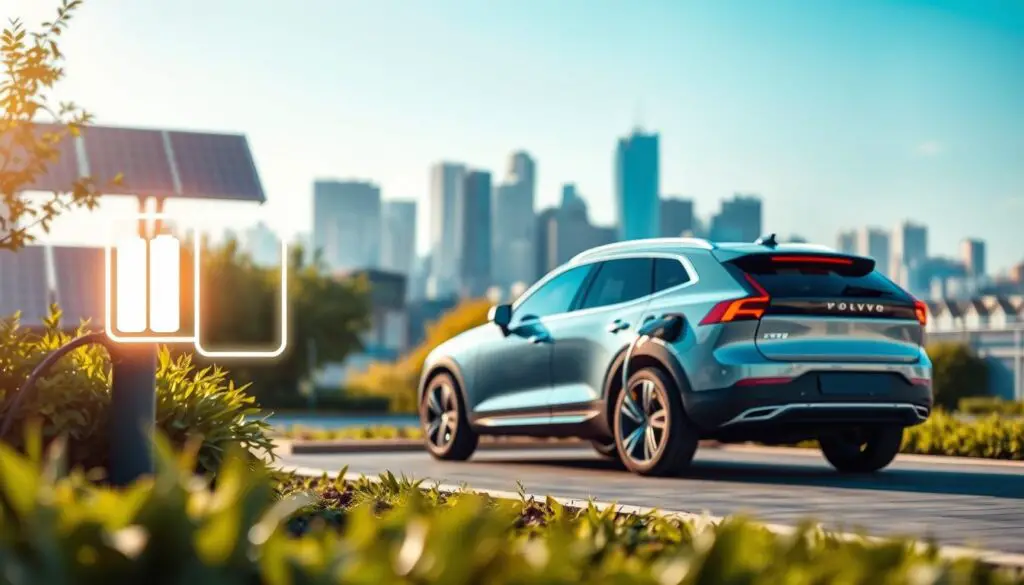
Where emissions show up across a battery’s life
Volvo Group reports ~96% of lifecycle impact in Scope 3, tied to use of sold products. Scope 1 and Scope 2—direct plant emissions and purchased energy—are under 1% combined.
How scopes map to real operations
- Scope 1: fuel and onsite processes at plants.
- Scope 2: purchased electricity and energy for sites.
- Scope 3: customer operation of vehicles over years.
| Lifecycle Stage | Main Source | Priority Action |
|---|---|---|
| Production | Materials, factory energy | Clean energy, efficient production |
| Use | Vehicle operation, electricity mix | Efficient products, smart charging |
| End-of-life | Reuse, recycling losses/credits | Second life, remanufacture, recycle |
Reporting guides where the business focuses. Targets include net-zero by 2040 and near-term segment reductions that align with the Paris Agreement. Strategies differ by scope: energy efficiency and renewable energy for sites, and tech, infrastructure, and behavior for the use phase.
Value grows when materials stay in use longer. That circular logic lowers demand for virgin inputs and cuts global CO2 impact. Next we’ll review specific engineering and ecosystem actions that support these aims.
What steps does Volvo take to reduce battery lifecycle emissions?
Operational upgrades and smarter vehicle use deliver the clearest cuts in overall impact.
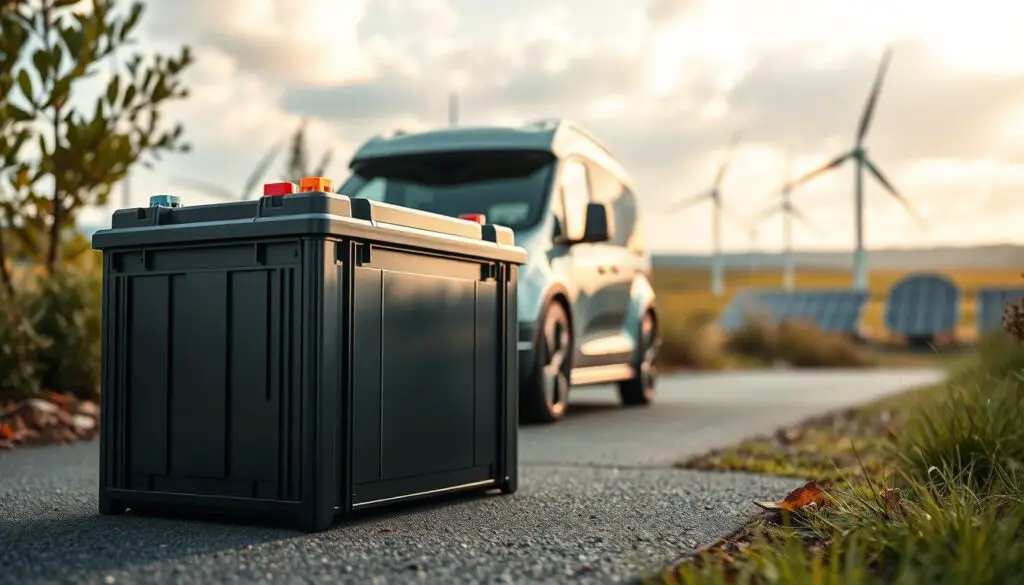
Lowering site emissions with energy efficiency
Upgrades at factories, engineering centers, offices, and dealerships cut onsite fuel and electricity needs. Replacing old equipment and adding controls improves efficiency and lowers Scope 1 and Scope 2 emissions.
Higher renewable sourcing from energy suppliers further reduces the GHG intensity tied to building and supporting vehicle batteries.
Targeting the largest share: use-phase gains
The volvo group focuses on efficient vehicles, practical electrification, and user support that changes real-world behavior. Convenient, reliable charging and cleaner power reduce environmental impact during years of use.
Protecting First Life with smart systems
An intelligent battery management system limits degradation by keeping optimal SOC, preventing extremes in temperature, and pacing charge cycles. SOC means state of charge; SOH means state of health. Monitoring both helps teams extend usable years and avoid early replacement.
Data, teams, and smarter charging
Dedicated energy and charging teams collect performance data. That feedback loop improves system tuning and charging practices, maximizing value per pack before second life or recycling.
Designing batteries for circular value: second life, remanufacturing, and recycling
Engineers now plan cells and modules with future reuse, remanufacture, and recycling in mind.
Why used packs are assets, not waste
Volvo Energy reports many packs retain about 80% capacity after 7–8 years. That remaining value makes second life an efficient route to cut CO2 and material demand.
Decision Engine: data and AI for best next use
A “Decision Engine” ingests pack data, health indicators, and logistics inputs. AI scores options—refurbish, remanufacture, repurpose, or recycle—while minimizing transport and matching supply with demand.
Refurbish, remanufacture, repurpose, recycle
Refurbishment swaps faulty modules and extends service life with low resource cost.
Remanufacturing rebuilds to restore SOH to near 100% and returns units with warranty intent.
Repurposed packs become battery energy storage solutions for buildings, off-grid use, and grid support; investments like Connected Energy show the model is real.
Recycling discharges and dismantles packs to recover cobalt, nickel, magnesium, copper, and other critical materials for new cell production.
| Pathway | Primary benefit | CO2 / material impact |
|---|---|---|
| Refurbish | Extend life; low resource use | Lower CO2 vs new pack |
| Remanufacture | Restore SOH; warranty-backed | ~85% CO2 savings vs new parts (Volvo Cars data) |
| Repurpose (BESS) | High-value storage; grid services | Delays virgin material demand; supports renewables |
| Recycle | Recover critical materials | Feeds materials back into supply; reduces extraction |
Building a circular business relies on local partners and recycling enablers. Real projects—BatteryLoop, Comsys AB, Fortum—show practical pathways that cut CO2, save material, and create new revenue streams.
Conclusion
Conclusion
A systems strategy — cleaner sites, smarter use, and circular returns — is the core answer.
Because use‑phase accounts for about 96% of total impact, the biggest climate gains come from efficient vehicles, cleaner charging, and real‑world energy choices. Volvo Group pairs those actions with target dates such as net‑zero by 2040 and a 50% cut in Scope 1 & 2 by 2030.
Practical systems — SOC/SOH monitoring, battery management, and data‑driven decision tools — extend first life and guide second life, remanufacturing, repurpose, and recycling. That circular approach keeps materials cycling and trims CO2 over time.
In short: measurable targets, smart design, and a cleaner grid together determine whether lifecycle impact falls in line with Paris Agreement goals.
FAQ
How are emissions distributed across a vehicle battery’s life?
Emissions occur mainly during raw material extraction and cell production, then during vehicle operation through electricity use, and finally at end-of-life when batteries are reused, remanufactured, or recycled. Production and use phases typically represent the largest shares, so strategies address both manufacturing energy and in‑service efficiency.
How is impact tracked through Scope 1, 2, and 3 reporting?
The company measures direct operational emissions (Scope 1), purchased energy emissions (Scope 2), and the broader supply chain and product use emissions (Scope 3). Robust data collection, supplier reporting, and life cycle assessments feed these disclosures, allowing progress tracking against climate commitments and regulatory requirements.
What climate goals and milestones guide corporate action?
The organization aligns targets with the Paris Agreement and sets interim milestones for carbon reduction across operations and value chains. Targets include increasing renewable energy use, lowering vehicle operational emissions, and working with suppliers to reduce upstream CO2 intensity.
How are operational emissions reduced at manufacturing and service sites?
Efforts include energy efficiency upgrades, electrifying heat and processes, sourcing renewable electricity via power purchase agreements and certificates, and implementing on‑site solar or storage systems to cut electricity‑related emissions.
How is the largest share of emissions—those from vehicle use—addressed?
The focus is on improving vehicle energy efficiency, optimizing powertrain controls, enabling smart charging, and promoting low‑carbon electricity in markets where vehicles operate. Fleet electrification paired with cleaner grids yields substantial lifetime CO2 reductions.
How are batteries kept healthy during first life to extend service years?
Advanced battery management systems continuously monitor state of charge and state of health. Software optimizes charging profiles, limits high‑stress cycles, and issues maintenance guidance to maximize usable life and delay replacement.
How does charging behavior get improved to lower lifecycle impact?
The approach combines driver guidance, intelligent charging features, and partnerships to expand low‑carbon charging infrastructure. Incentives and fleet tools encourage off‑peak and renewable‑rich charging schedules to reduce operational emissions.
Why are used vehicle batteries treated as assets rather than waste?
End‑of‑service packs retain significant residual capacity. Treating them as assets enables higher lifetime value through diagnostics, refurbishment, remanufacture, second‑life deployment in energy storage, or material recovery, which cuts demand for new raw materials.
What role does data and AI play in deciding a battery’s next use?
A decision engine analyzes battery diagnostics, state of health, usage history, and market needs to recommend refurbishment, remanufacture, repurposing into energy storage systems, or routing to recycling. This data‑driven approach optimizes environmental and economic outcomes.
How are battery packs refurbished to extend service life?
Refurbishment teams replace defective modules, repair interconnects, and update thermal and electronic components. After testing, refurbished packs can reenter vehicles or serve in less demanding second‑life roles with warranty coverage aligned to performance.
What does remanufacturing involve and why is it important?
Remanufacturing restores packs to near‑new specifications by replacing cells and key components, revalidating systems, and certifying performance. This reduces raw material demand and lowers embodied emissions compared with producing entirely new packs.
How are used batteries repurposed into energy storage systems?
Modules and packs that no longer meet vehicle requirements can be reconfigured into Battery Energy Storage Systems (BESS) for grid services, microgrids, or renewable integration. These systems extend useful life and provide value in supporting low‑carbon energy.
What recycling processes recover critical materials from cells?
Advanced hydrometallurgical and pyrometallurgical recycling recover nickel, cobalt, lithium, and other elements. Closed‑loop partnerships aim to return recovered materials into new cell production, cutting supply‑chain emissions and resource pressure.
How is a circular business model built with partners and local enablers?
Collaboration with suppliers, recyclers, energy companies, and local authorities creates regional loops for reuse and material recovery. Local processing reduces transport emissions, supports regulatory compliance, and strengthens supply resilience.