
What Volvo owners call the oil trap is the same as the PVC part that lets the engine breathe. It vents crankcase blow-by gases so seals and gaskets are not pushed by excess pressure. A clogged unit speeds oil deterioration and can lead to oil burning and early seal wear.
This introduction frames a simple diagnostic flow. Start with easy checks you can do at home: feel for pressure under the oil cap, watch dipstick behavior, and note any rough idle. Those signs point toward restricted ventilation.
If you confirm symptoms, the usual repair path is clear: gain intake access, replace the oil trap assembly, inspect hoses, and clean passages. Turbo layouts add a few routing and feed notes, but the goal stays the same — restore proper crankcase ventilation for longer engine life.
Key Takeaways
- Define oil trap and pcv so you know what to check.
- Begin with basic home checks before using tools.
- Pressure and trapped blow-by shorten oil life and harm seals.
- Common fixes: access intake, replace trap, renew hoses, clean passages.
- Early detection prevents costly secondary damage.
Understanding the Volvo PCV System and Oil Trap
Knowing where the breather box lives and what it does makes diagnostics faster and less costly.
Crankcase ventilation handles combustion blow-by that collects oil mist and vapors in the crankcase. That vapor must return to the intake stream and be burned rather than vented to the atmosphere.
The oil separator captures droplets so the engine ingests mainly air and vapor, not liquid. That reduces deposits and keeps the intake tract cleaner.
Where it sits and routing differences
On many engines the breather box sits under the intake manifold and links to the block with hoses and clamps. Naturally aspirated units route crankcase vapors straight into the manifold, while turbo layouts add a turbo connection that impacts boost plumbing and oil control.
Exceptions and a quick baseline
Certain models—C30, C70 (2006+), S40 (2004.5+), V50—may have the oil separator integrated into the oil filter housing. Always confirm by VIN or engine family before ordering parts for your vehicle.
“The system should hold a slight vacuum; it must not whistle, force oil past seals, or create positive pressure.”
Check the pcv valve and hoses if flow feels wrong.
Signs Your Volvo Oil Trap or PCV Valve Is Clogged
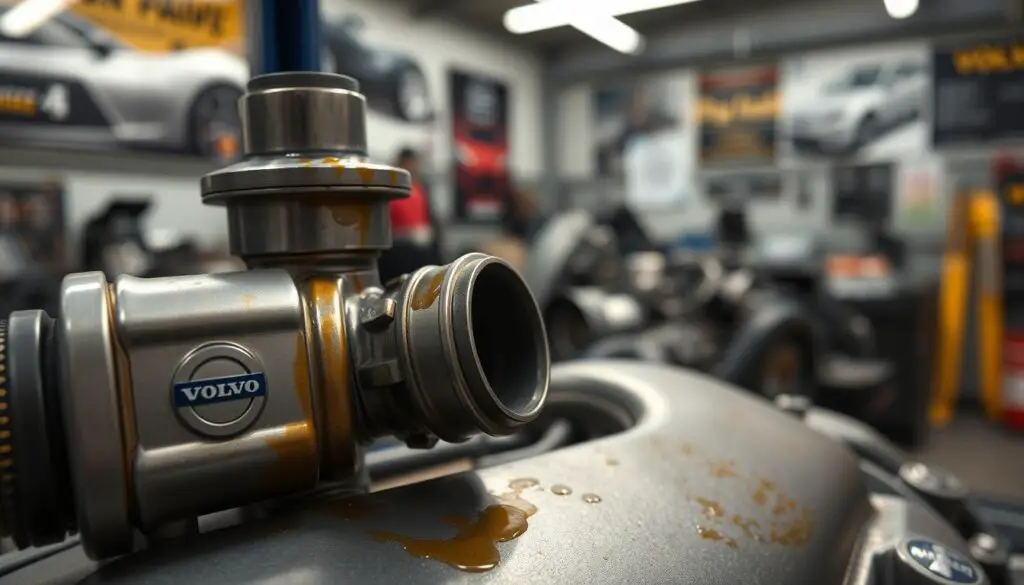
Start by listening and watching. A sharp whistle from the engine bay that stops when the filler cap is removed suggests abnormal crankcase pressure and restricted airflow.
Whistle and pressure clues
A disappearing whistle is a solid diagnostic clue. That sound means pressure is seeking an escape path. Confirming it at the cap narrows the fault to the breather and valve area.
Leaks and seal failures
When ventilation is blocked, pressure forces oil past seals and gaskets. That creates visible oil leaks around valve covers, cam seals, or intake gaskets.
Driveability and idle problems
Restricted ventilation can cause a rough idle, poor throttle response, or an oscillating idle. The engine may run uneven as unmetered vapors upset fuel trim.
Dipstick and warning lights
A dipstick that pops up or shows oil residue around the dipstick tube points to pressure buildup. A check engine light related to fuel trims or an oil pressure lamp can follow if the suction strainer or filter clogs.
Turbo-specific signs
Turbo cars may show higher oil consumption, blue smoke, reduced boost, or turbo noise when sludge or debris restricts oil feed lines.
What Causes PCV Sludge Buildup on Volvos
Sludge in the breather begins with everyday habits and worsens over time. Contaminants, moisture, and heat combine in the venting path and form sticky deposits that choke passages and valves.
Key contributors:
- Long service intervals and the wrong viscosity or low-quality oil let contaminants thicken and cling inside the separator.
- Short trips with repeated cold starts trap moisture and condensation in blow-by, which speeds gunk formation.
- Excessive idling raises operating hours without proper airflow or temperature, so hoses and chambers collect deposits.
- Poor fuel quality or high-alcohol blends create more combustion byproducts that degrade oil faster.
- Unnecessary additives can break down and add solids when ventilation is restricted.
- High heat and humidity accelerate oxidation, cutting component life and increasing deposit rates.
Note: When sludge causes restriction the correct repair restores flow and cleans affected parts rather than masking symptoms.
Condensed comparison
| Cause | How it works | Short-term sign | When it matters |
|---|---|---|---|
| Extended drain intervals | Contaminants accumulate in oil and separator | Visible gunk at hose ends | After many miles without service |
| Short trips/cold starts | Moisture condenses in blow-by | Dark, sticky residue | Frequent short runs or city driving |
| Poor fuel / additives | More byproducts and degraded oil | Faster oil degradation and deposits | Low-grade fuel or heavy additive use |
For broader context on related engine failures and part choices, see an engine problems reference.
How to repair oil trap and pcv concerns
Begin with a few quick checks that tell you if an intake teardown is needed. Feel for pressure under the filler, scan hoses for oil wetness, and inspect the filter for thick black deposits.
Start with quick checks before teardown
Check the fresh air intake near the turbo and all breather hoses for clogs or collapsed sections. Cleaning lines can fix many faults, but deeper blockage may remain.
Testing and access
Use Volvo tool 9997514 at the dipstick tube to confirm any positive crankcase pressure. A healthy setup shows no sustained positive pressure.
Safe teardown and replacement steps
Remove the intake manifold to reach the breather box. Disconnect the battery, move the injector rail after detaching the main fuel line, and unplug electrical connectors before lifting the manifold.
| Task | Action | Parts recommended |
|---|---|---|
| Inspect filter | Look for thick black deposits | Replace filter if contaminated |
| Hose check | Blow through each hose; replace cracked or brittle lines | New breather hoses, clamps |
| Deep sludge | Drop oil pan, clean pickup strainer, replace o-rings | Pickup o-rings, Volvo 1161059 seal |
Note: Replace the breather assembly, oil trap-to-block seal, and intake manifold gasket when you reassemble. Use proper clamps, replace the banjo bolt (31325709) if disturbed, refill fluids, warm the engine, then road-test and recheck for leaks and corrected pressure.
Parts, Part Numbers, and Job Planning for a Proper PCV Repair
Plan parts and timing before lifting the intake; ordering the right components saves repeat trips.
Common items for a full-service job
Shopping list: breather box (oil trap), main breather hoses, the medusa intake-to-trap pipe, intake manifold gasket, and the trap-to-block seal.
Part-number callouts and fitment notes
Examples: oil trap variants 1271988 and 31338685; service-chart trap 8692211. Other referenced parts include breather hose 8692217, hose 8653339, side hose 30677388/1271653, and medusa pipe 30731068.
| Consumable | Part Number | Why |
|---|---|---|
| Oil pickup o-ring | 30637867 | Prevents suction leaks if sludge requires pan removal |
| Sump o-rings | 8642560 / 8642559 | Replace when oil pan is dropped |
| Intake banjo bolt | 31325709 | Replace due to breakage risk |
Time, tools, and while-you’re-in-there items
Expect most labor while accessing the intake manifold; plan extra time if the oil pan must come off.
Basic tools cover sockets and screwdrivers; add Volvo tool 9997514 for pressure testing. While the manifold is off, clean the throttle body, inspect brittle plastic fittings and hoses, and renew any seals or vacuum lines that look aged.
Tip: Many owners service this assembly around 100k–120k miles depending on driving cycle and maintenance history.
Conclusion
Finish with a clear checklist: confirm symptoms, inspect intake and breather hoses, test crankcase pressure, then remove the manifold only when evidence points to a clogged unit or blocked passages.
Why this matters: restoring proper pcv flow prevents pressure-driven leaks, cuts sludge buildup, and lowers the risk of turbo or oil-pressure complications.
Prioritize correctness over shortcuts. Replace brittle hoses, use proper clamps, and verify airflow through every line for a lasting repair.
If heavy sludge is present or oil pressure warnings appear, dropping the pan and cleaning the pickup screen is risk management, not optional maintenance.
Shorter service intervals and the correct oil spec are the simplest ways to avoid repeat blockage. The site may use cookies for analytics and personalization; review cookie settings if prompted.
Short on time, tools, or access? Schedule the job with a Volvo-experienced technician and bring your part list and pressure-test results to speed diagnosis.