
Long routes demand steady attention. Hours behind the wheel increase the chance of drowsy moments and small lapses that lead to serious accidents. This piece explains how an upgraded in-cab system acts as preventive support to spot early signs of reduced alertness and prompt corrective action.
The approach blends vehicle movement cues with camera-based checks. By comparing steering inputs, lane position and gaze patterns, the system flags drift and issues an escalating alert if attention slips. The feature is meant to assist, not replace, operator judgment.
Readers in the United States will find a clear view of current camera methods and where sensor technology is headed next. Later sections detail dual cameras, eye-tracking, escalation logic, speed thresholds, and the legal option to disable the feature.
Key Takeaways
- Long trips raise the risk of tiredness; early warning helps prevent accidents.
- Camera and vehicle data combine to detect attention lapses.
- The feature issues graded alerts to prompt breaks or re-engagement.
- Design focuses on safety as a supplement to operator responsibility.
- Later sections cover technical parts, real-world behavior, and controls.
What’s New in Volvo’s Driver Fatigue Monitoring for Long-Haul Driving
A major update adds a second camera that watches the cab while the truck reads the road. The upgraded Driver Alert Support pairs an eye-tracking camera mounted on the side display with the forward-facing camera already used for lane and steering cues.

The two-camera approach improves detection. The forward lens maps lane position and roadside context. The inward lens reports gaze and attention. Together they spot distraction and early drowsiness more reliably than a single input.
What drivers will notice
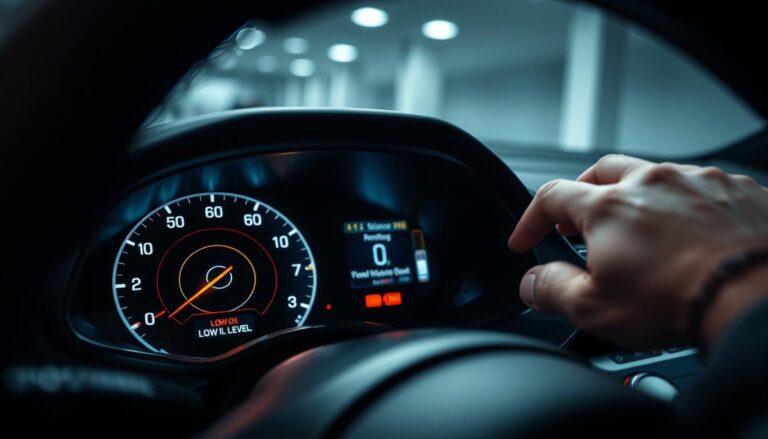
The system prompts a pop-up message plus a warning sound when attention slips. If the state continues, a second pop-up appears with an escalated acoustic warning. The eye-tracking camera is active above 18 km/h, so the feature works during typical road cruising.
| Feature | Role | Availability |
|---|---|---|
| Eye-tracking camera | Gaze and attention | Standard on FH/FM/FL/FE (EU, select markets) |
| Forward-facing camera | Lane and steering context | Global; base option outside EU |
| Alerts | Pop-up message, warning sound, escalated acoustic | Active from Nov 2025 production |
Regulatory alignment: The design meets GSR2 and is positioned for the July 2026 ADDW step. Production starts November 2025, with ordering options for other markets.
How does Volvo monitor driver fatigue and behavior in long-distance driving?
The system blends two camera views to spot early signs of reduced focus. An inward eye‑tracking camera sits above the side display and watches where the operator looks. It detects extended glances away from the road and other gaze patterns that match lowered alertness.

Eye-tracking camera
The inward camera evaluates driver eyes and head angle. It flags when driver looking time away from the road grows long. This helps identify drifting attention before control errors occur.
Forward-facing camera
The forward camera reads lane markings, roadside position, and steering wheel movements. By comparing lane position with wheel inputs, the system spots subtle weaving, delayed corrections, or unstable path control common on long stretches.
Decision logic and alerts
The decision to issue an alert uses both gaze cues and vehicle‑path cues to lower false positives. First comes a pop-up message plus a warning sound. If inattention continues, a second message and an escalated acoustic warning follow to increase urgency.
Activation and driver control
Monitoring switches on with ignition and the cameras operate above 18 km/h. A physical switch allows de‑activation to meet legal control requirements, while the default state remains on for safety.
How Volvo’s Approach Evolved From Driver Alert Control to Infrared Sensor Monitoring
Volvo Cars began with lane‑based monitoring and has since tested inward‑facing sensors. The first Driver Alert package used road‑position sensing as a proxy for reduced attention. That baseline set expectations for subsequent safety technology upgrades.
Early Driver Alert Control and Lane Departure Warning
Introduced at the end of 2007, the Driver Alert Control (DAC) and Lane Departure Warning (LDW) tracked lane markings from a camera mounted near the interior mirror.
For example, the control unit measured steering consistency and distance to markings. When patterns matched uncontrolled driving, the system issued an audible alert and a coffee‑cup text prompt advising a break.
Drivers also saw a five‑bar driving‑consistency display in the trip computer. Fewer bars indicated less steady control over time.
Next‑generation infrared testing
Volvo later trialed sensors that use invisible infrared light to read eye openness, head angle, and whether the face looks forward.
“The concept aims to adapt support timing to actual attention, not to create a surveillance function.”
Privacy by design is central: Volvo says pictures are not stored. The intent is analysis only, so the vehicle can better tailor warnings and reduce the number of accidents caused by delayed prompts.
- Operating limits: DAC/LDW step in around 65 km/h and remain active above 60 km/h.
- Constraints: Visibility of markings matters; poor light, fog, snow or extreme weather can reduce availability.
Conclusion
The upshot is clear: combined vehicle cues and inward cameras deliver earlier, more precise alerts for long hauls. This layered approach helps drivers spot lapses and respond before control problems appear.
The system is active by default with ignition. The eye-tracking camera works above 18 km/h, and a legal off switch remains available for user control.
Practical outcome: drivers get graded pop-ups and audible warnings to prompt a break or refocus. Treat these alerts as timely information to plan rests and reduce distraction.
With production set for November 2025 and wider regulatory alignment, expect broader support across models and markets.
FAQ
What systems detect drowsiness and distraction behind the wheel?
Volvo uses a combination of in-cabin and forward-facing systems: an eye-tracking camera monitors gaze and blink patterns while a forward camera watches lane markings, roadside position, and steering inputs. These systems work together to identify signs of reduced attention or sleepiness and trigger warnings when needed.
What new features are included in the upgraded Driver Alert Support?
The upgraded Driver Alert Support adds dual cameras to improve detection of both eyelid movement and overall head position. It refines distraction recognition, reduces false positives, and provides clearer pop-up messages and graduated acoustic warnings when unsafe behavior persists.
When will the upgraded monitoring be available?
Production timing indicates the new system will be standard on selected Volvo truck models in certain markets beginning November 2025. Availability may vary by region and trim level, so check local Volvo Trucks announcements for final rollout details.
How does the eye-tracking camera recognize attention drift?
The eye-tracking camera analyzes gaze direction, blink rate, and periods of closed eyes to detect attention drift. Algorithms compare these metrics to normal driving patterns and flag sustained deviations that match drowsy or distracted behavior.
What role does the forward-facing camera play?
The forward-facing camera tracks lane markings, vehicle position on the road, and steering-wheel movements. It identifies lane departures, weaving, or prolonged drifting toward road edges, which complement in-cabin signals to assess overall driver state.
How does the system decide when to issue a warning?
The decision logic looks for typical patterns such as increased blink duration, repeated gaze away from the road, and unstable lane position. When combined thresholds are exceeded, the system issues a tiered alert sequence aimed at restoring attention before risk rises.
What form do driver alerts take?
Alerts begin with a clear pop-up message on the instrument display accompanied by a warning tone. If risky behavior continues, the system escalates to louder acoustic warnings and persistent messages to prompt immediate corrective action.
At what vehicle speeds is monitoring active?
Monitoring is active automatically when the vehicle ignition is on and cameras are operating. Specific activation rules include enhanced monitoring above roughly 18 km/h, when long-distance driving demands steady attention and lane-keeping vigilance.
Can the driver turn the system off?
Yes. Volvo provides a manual override so drivers can deactivate the system via a dedicated switch. This ensures control while still encouraging use of safety features under normal operations.
How did Volvo’s approach evolve from earlier Driver Alert Control systems?
Early Driver Alert Control and Lane Departure Warning relied primarily on road-position sensing and steering behavior. The evolution added in-cabin sensing and more advanced fusion algorithms to detect internal signs of tiredness, improving early detection of risk states.
What are the next-generation sensor developments being tested?
Newer prototypes use infrared sensors to monitor head angle and eye openness without storing raw images. These sensors enhance night-time performance and privacy by processing biometric signals into indicators rather than saving video.
Does the system store camera images or personal data?
Modern implementations emphasize privacy. Many designs process data in real time and avoid storing raw images. Infrared and algorithmic processing typically convert visual input into anonymized attention metrics rather than retaining pictures.
How do these systems help reduce accidents during long-haul trips?
By detecting early signs of inattention and issuing timely, escalating alerts, the systems prompt corrective actions—regaining focus, taking a break, or pulling over. This proactive approach lowers the chance of lane departures, collisions, and other fatigue-related incidents.