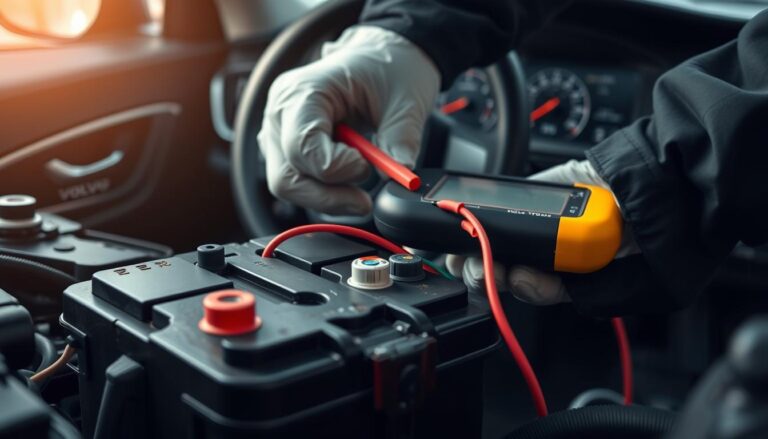

Modern Volvos use on-board computers and many sensors to watch vital systems. When a parameter falls outside factory limits, an engine warning may appear on the dashboard. This alert is a prompt to check the vehicle soon, not an immediate verdict.
A steady check engine light often points to minor faults such as a loose gas cap or fueling error. In many cases, you can continue driving carefully while you monitor performance, temperature, and any new noises.
A flashing engine light usually signals a misfire risk. That condition can let unburned fuel harm the catalytic converter, so owners should reduce load and seek service quickly if the warning escalates.
Electrified models show the same icon for different systems, and EVs or hybrids may report accessory faults or range loss. Quick checks can prevent costly repairs and help you talk clearly with a service advisor.
Key Takeaways
- The light is a proactive warning; plan a check rather than panic.
- Steady light: monitor performance; flashing light: stop and seek service.
- Simple issues like a loose gas cap can trigger the warning.
- Watch dashboard gauges, sounds, and vibrations while driving.
- EV and hybrid alerts may indicate different system faults; know your model.
What a solid Check Engine light means on a Volvo
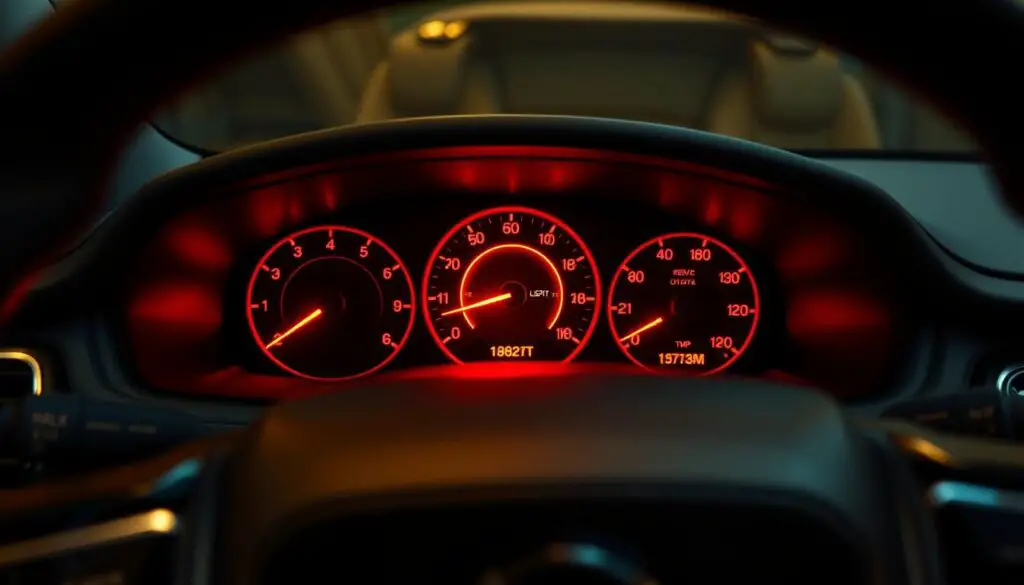
When onboard sensors report data beyond factory tolerances, the car’s computer illuminates the engine indicator as a prompt to investigate. Volvo models use an electronic control module that watches air, fuel, ignition, and emissions inputs. When a reading fails the threshold, the dashboard warning appears.
Steady vs. flashing: how severity is indicated
A steady check engine light usually signals a non-urgent fault. Common causes include minor EVAP leaks, a loose gas cap, or small sensor drift. These issues often let you continue driving while you arrange service.
Flashing indicates active misfires. Unburned fuel can reach the catalytic converter and rapidly raise exhaust temperature. That can damage the catalyst, so a flashing engine light demands immediate attention.
Why your ECM turns the engine light on
The electronic control module compares inputs from MAF, oxygen, and other sensors to factory maps. If air/fuel metering, ignition timing, or coil events stray, the computer stores trouble codes. Those codes point technicians toward systems that need testing.
- Steady alerts often stem from EVAP, cap fitment, or transient emissions faults.
- Flashing alerts usually mean misfires and possible catalyst overheating.
- Perceived power loss, rough running, or new noises raise urgency even with a steady indicator.
Next step: record conditions when the warning started—cold start, refill, or highway run—so a service advisor can reproduce the trouble and avoid guessing at repairs.
Immediate steps to take when the light turns on
If the indicator comes on while you’re driving, follow a few basic steps to limit damage and clarify the cause.
Check gas cap fitment and recent refueling
Pull over safely and confirm the gas cap is present, undamaged, and tightened until it clicks. A poorly sealed gas cap often triggers EVAP faults and the check engine indicator.
If you refueled recently or used a different fuel brand, note that in your log; that detail can explain transient emissions codes.
Observe performance, sounds, temperature, and dashboard lights
Restart the car and watch idle quality and throttle response. Listen for new noises and scan the dashboard for other warnings like oil-pressure or charging indicators.
Keep a close eye on the temperature gauge; overheating plus a warning requires immediate shutdown to prevent engine damage.
Reduce speed and load if drivability is affected
If you feel hesitation, loss of power, or rough running, slow down and avoid hills, towing, and high RPM. Limiting load helps protect the catalytic converter and related systems.
“If the engine light is flashing or drivability worsens, call for assistance rather than risk further damage.”
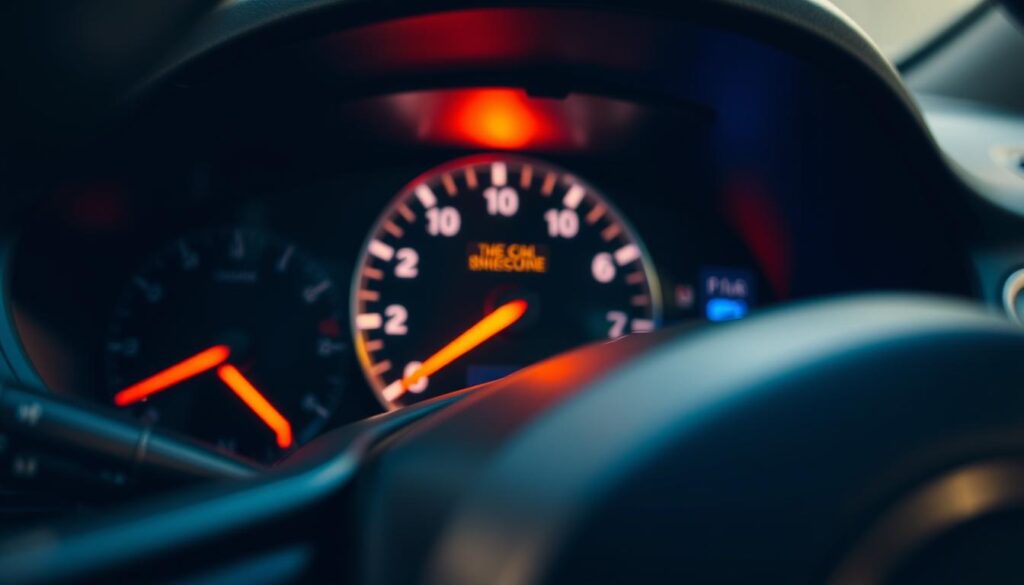
- Make a quick tire and visual check before traveling to a service center.
- Keep notes on when the issue appeared and which fuel you used to speed diagnosis at the shop.
- Schedule service promptly; flashing indications usually need immediate professional attention.
Is it safe to drive my Volvo with a solid “Check Engine” light?
A persistent indicator usually points to a non-urgent fault that may let you reach a shop safely. If the car runs normally and gauges remain stable, short, cautious trips are often acceptable while you arrange repair.
Keep speed and load low. Minimize acceleration, avoid towing and steep grades, and do not run long high-speed drives. These steps reduce stress on the engine and emissions hardware.
When a steady alert may allow limited travel
If power, idle, and temperature stay normal, plan a direct route to a qualified service center. Avoid prolonged idling or sustained high RPM. Note recent refueling and any changes in performance for the technician.
When a flashing warning demands a stop
Stop driving and seek help immediately if the indicator flashes or if the car loses power, runs rough, or pings. Flashing usually means misfires that can send unburned fuel into the catalytic converter and cause rapid damage.
- Do not ignore intermittent ignition problems—spark plugs or coils can worsen quickly.
- Consider roadside assistance if the warning escalates mid-trip.
- Tell the service advisor whether the light was steady or flashing and describe any symptoms.
“Stopping early can prevent costly downstream damage and save repair time.”
Common causes: from loose gas cap to sensors and spark plugs
Many engine alerts originate from simple faults you can check before booking service. Start with easy items, then move to sensors and ignition parts if the warning persists.
Loose or damaged gas cap and EVAP leaks
A cracked or loose gas cap can trigger an EVAP fault. Inspect the cap seal and tighten until it clicks.
Oxygen and mass airflow sensors
Oxygen sensors monitor exhaust composition and help the computer keep fuel mixtures correct. A failing sensor lowers efficiency and can harm the catalytic converter.
The mass airflow sensor measures intake air. Dirt or oil on its element skews readings and trips codes.
Spark plugs, ignition coils, and misfires
Worn spark plugs or failing ignition coils cause misfires. Misfires produce rough running and send unburned fuel into the exhaust.
Catalytic converter and emissions controls
Persistent misfires or rich mixtures can overheat and damage the catalyst. Converter codes often point back to upstream problems that need repair first.
- Check vacuum hoses and fuel pressure if idle is unstable.
- Scan for codes before swapping parts; verification saves time and money.
- Replace wear items like plugs at intervals and use quality parts to lower repeat warnings.
“Diagnose first, replace parts second.”
How many miles can you drive with the engine light on?
There is no fixed safe mileage when an engine warning appears. The distance you can cover depends on the stored diagnostic code and how the car performs while running. Symptoms, not just the icon, determine urgency.
If a loose gas cap caused the issue and you tightened it, many Volvos will extinguish the warning after about 20–40 miles as readiness monitors complete their checks. If the icon stays on, further diagnosis is required.
A flashing indicator means stop immediately. Continuing to drive with active misfires risks severe damage to the catalytic converter and other emissions hardware.
When travel is unavoidable, limit trips to essential, short drives. Choose flatter routes, avoid heavy loads and long highway runs, and watch gauges and performance closely.
- Read codes with an OBD-II scanner to decide whether to go straight to service or schedule a visit.
- If operation feels normal and the light is steady, plan a direct trip to a nearby service center.
- Extending miles without evaluation can turn a minor gas cap or sensor issue into a costly repair.
“When in doubt, restrict driving to essentials and have the vehicle checked—prevention saves parts and expense.”
Can the Check Engine light reset itself?
Short answer: sometimes the lamp turns off without a shop visit, but that depends on the root cause and completed system checks.
Situations where the light goes off after 20–40 miles
If a simple fault is corrected—such as tightening a gas cap—the vehicle’s computer needs several drive cycles to rerun emissions monitors. When those monitors complete with no new faults, the engine light often extinguishes after roughly 20–40 miles.
During this period, avoid heavy loads and long highway stints. Document fuel used, start conditions, and any odd behavior; that record helps a technician if the warning returns.
When codes persist and require diagnosis
When the lamp stays on beyond the typical miles, stored trouble codes or incomplete monitors usually indicate an unresolved problem. Sensor degradation, ongoing misfires, or catalytic efficiency loss rarely clear themselves and need testing.
- Use an OBD-II scanner to read pending and stored codes rather than guessing.
- Avoid clearing codes blindly; doing so removes diagnostic history technicians rely on.
- If performance worsens during the test miles, stop and seek professional service right away.
For guidance on related electrical and ignition faults, see this detailed piece on ignition switch problems.
DIY basics: reading trouble codes on your Volvo
Pulling trouble codes is the fastest way to move from worry to action when an engine indicator appears. A basic scan tells you which system the computer flagged and narrows the scope of repairs. Start with a clear record of symptoms and recent fuel or service events.
Using an OBD-II scanner and where to plug it in
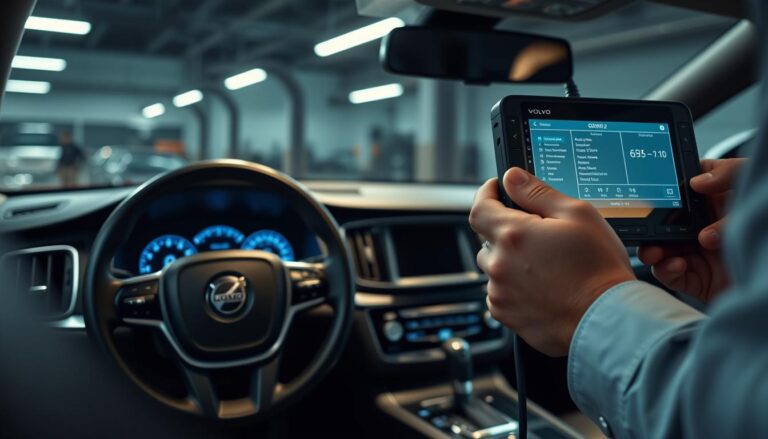
Locate the OBD-II diagnostic port in the driver’s footwell. On many Volvos such as the XC60, it sits on the left underside of the dash near your left knee. Plug in the scanner with the ignition on and follow the reader prompts.
Interpreting DTCs without guessing the repair
Diagnostic trouble codes (DTCs) point to circuits, sensors, or conditions—not always the failed part. Use a scanner that shows freeze-frame data, readiness monitors, and live values like O2, MAF airflow, and fuel trims.
- Do this first: record codes, capture live data, and note driving conditions.
- Avoid clearing codes before saving data; erased history can hide intermittent faults.
- Use manufacturer test procedures rather than swapping parts based on a code alone.
“A clear code readout plus live data often prevents unnecessary repairs and speeds service.”
| Tool / Check | What it shows | Why it matters | Action |
|---|---|---|---|
| Basic code reader | Stored DTCs | Identifies flagged circuit | Record codes; plan next test |
| Advanced scanner | Freeze-frame & live data | Shows conditions when fault set | Compare O2, MAF, fuel trims |
| Manufacturer guides | Test procedures | Correct diagnosis flow | Follow steps; avoid part swaps |
| Safety checks | Airbag and wiring locations | Prevents damage while probing | Avoid improvised tools |
When to call a pro: if codes indicate misfire, catalytic risk, or if live data conflicts with simple fixes. A short DIY scan today can shorten shop diagnosis and improve the repair outcome.
EV and hybrid Volvo considerations
Warnings in electrified models often point at battery management, power electronics, or cooling rather than fuel or ignition parts. That means the familiar dashboard icon can flag high-voltage battery, inverter, or traction-motor issues.
Battery, cooling, inverters, and traction motor alerts
Watch for thermal messages or cooling-fan activity. Overheating or coolant faults for the battery may limit power output or stop charging to protect components.
Inverter or motor faults can trigger limp modes that reduce power and limit speed. These systems require trained technicians and specialized tools.
Reduced range or performance and accessory failures
Symptoms often include reduced range, weaker acceleration, or accessory outages such as HVAC and infotainment shutting down.
If multiple systems fail, safely park the vehicle and call roadside assistance. Capture screenshots of warnings to speed technician triage.
“High‑voltage components need certified EV service; do not attempt repairs without proper equipment.”
| Symptom | Likely system | Immediate action |
|---|---|---|
| Thermal warning | Battery cooling | Limit load; stop if persistent |
| Reduced power / limp mode | Inverter or traction motor | Drive slowly to safe spot; call service |
| Accessory outages (HVAC, infotainment) | Battery management / protection | Record messages; contact certified EV service |
When to seek professional service and typical costs
Timely diagnosis keeps small issues from cascading into catalytic converter or ignition system damage. If the engine light flashes, power falls off, or temperature climbs, arrange service today.
Why misfires are urgent
Misfires dump unburned fuel into the exhaust. That fuel burns in the converter and raises temperature quickly.
High heat can warp or melt the catalyst, causing permanent damage and expensive replacement.
Typical diagnosis pricing and what’s included
Many dealers charge about $88–$111 for a standard diagnostic test. Some shops offer complimentary scans in special cases.
A typical check includes:
- ECM code retrieval and freeze-frame review.
- Visual inspection of sensors, ignition coils, and plugs.
- Guided tests for oxygen and mass airflow sensors, fuel pressure, and vacuum.
- Road or live-data checks to confirm misfire or fuel-related problems.
| Service | What techs do | Why it matters |
|---|---|---|
| Code scan | Read DTCs and freeze-frame | Narrows root cause quickly |
| Sensor & ignition test | Check O2, MAF, coils, plugs | Prevents repeated repairs |
| Multi-point inspection | Safety and tire checks | Ensures safe arrival after repair |
“Share any DIY scan results and symptom notes with the technician to speed diagnosis and avoid extra parts being replaced.”
Conclusion
Treat a steady engine indicator as a prompt to confirm simple causes and plan a short, cautious trip for diagnosis. Check the gas cap and recent refueling, then monitor gauges and behavior before heading out.
Remember: a flashing engine warning demands an immediate stop and professional help to avoid catalytic converter damage. Many minor faults clear after about 20–40 miles once corrected, but persistent alerts need paid diagnosis (roughly $88–$111) to isolate the true problem and avoid needless parts swaps.
Electrified models may show different system faults; let certified EV technicians handle high‑voltage work. Keep notes, record any scans, and confirm basic readiness — including tire and visual checks — before longer trips. For more dashboard guidance see dashboard symbols.
FAQ
Is it safe to drive my Volvo with a solid ‘Check Engine’ light?
A steady warning lamp often signals a non-emergency fault. Limited driving at low speed to reach a service shop is usually acceptable, but monitor power, temperature, and unusual noises. If the car runs rough, stalls, or the coolant or oil temperature rises, stop driving and get professional help.
What does a steady engine warning mean on a Volvo?
A steady indicator typically means the engine control module detected a fault that affects emissions or performance but not immediate safety. Examples include sensor failures, EVAP system leaks, or minor fuel delivery issues. The vehicle stores diagnostic trouble codes for technician review.
How do steady and flashing lights differ in urgency?
Steady lights signal a persistent fault that usually allows controlled driving. A flashing light denotes a severe condition such as an active misfire that can damage the catalytic converter; in that case, stop and seek service right away.
Why does the engine control module turn the light on?
The ECM monitors sensors and systems. It sets the warning when readings fall outside expected ranges — for example, O2 sensor data, mass airflow inconsistencies, misfire counts, or EVAP leak detection. The lamp prompts diagnosis of stored DTCs.
What immediate checks should I perform when the light appears?
First, confirm the gas cap is tight and undamaged after refueling. Scan the dashboard for additional alerts and watch for changes in power, abnormal sounds, or temperature rises. If driving, reduce speed and avoid heavy loads until inspected.
Can a loose gas cap trigger the warning?
Yes. A loose, cracked, or missing fuel cap can cause EVAP system errors and set a fault code. Tightening or replacing the cap often clears the issue after several drive cycles, but stored codes may remain until scanned.
When is limited driving acceptable with a steady light?
If the vehicle idles smoothly, accelerates normally, and no other warnings appear, you can drive carefully to a repair facility. Keep trips short and avoid highway speeds or towing until a technician confirms the root cause.
How far or how many miles can I drive with the engine lamp on?
Distance varies by fault. Some owners drive dozens of miles for minor sensor issues; persistent misfires or fuel-trim errors can cause rapid damage. Use caution and have the system scanned within a day or two to avoid costly repairs.
Can the warning reset itself without repairs?
Yes. Some faults clear after the ECM sees normal sensor readings for several drive cycles, typically 20–40 miles of mixed driving. If the underlying issue remains, codes and the lamp will return and require diagnosis.
How do I read trouble codes on a Volvo at home?
Use an OBD-II scanner and plug it into the diagnostic port, usually under the dash near the steering column. Read stored DTCs and freeze-frame data. Use the code descriptions as a starting point — don’t assume a specific part without proper testing.
How should I interpret DTCs without guessing repairs?
Use the code to identify the affected circuit or sensor, then verify with live data and component tests. For example, a misfire code requires checking spark plugs, ignition coils, fuel delivery, and compression before replacing parts.
Do EV or hybrid Volvos show different warnings?
Yes. Electrified models add battery, inverter, and traction motor monitoring. Alerts can indicate reduced range, charging faults, cooling issues, or inverter errors. These systems often need dealer-level tools for accurate diagnosis.
What risks come from driving with active misfires?
Continued driving with misfires can overheat and damage the catalytic converter, leading to costly replacement. Misfires also reduce fuel economy and increase emissions. Stop driving and have the issue repaired promptly.
When should I seek professional service and what might it cost?
Seek a technician when the light persists, the car runs poorly, or a flashing lamp appears. Diagnostic fees typically range from –0 and include code reading and basic testing; final repair costs depend on the failed component, from inexpensive sensor or gas cap replacement to higher costs for catalytic converters or major engine work.