
When Volvo introduced the 850 model in 1991, it brought with it a groundbreaking safety innovation that would forever change automotive protection standards. The Side Impact Protection System (SIPS) represented a fundamental shift in how manufacturers approached passenger safety in side collisions. This comprehensive system, designed to protect occupants during one of the most dangerous crash scenarios, showcased Volvo’s unwavering commitment to safety innovation and set new benchmarks that competitors would spend years trying to match.
What Is SIPS? Understanding Volvo’s Side Impact Protection System
Comprehensive diagram of the SIPS system showing key structural components
SIPS stands for Side Impact Protection System, a revolutionary safety technology first introduced by Volvo in the 850 model. Unlike front or rear collisions where crumple zones can absorb significant impact energy, side impacts present a unique challenge due to the minimal space between the occupant and the point of impact. SIPS was specifically engineered to address this vulnerability.
At its core, SIPS is an integrated approach to side collision protection that combines structural reinforcements, energy-absorbing materials, and later, supplemental restraint systems. The system works by creating a stronger passenger compartment while simultaneously managing impact forces to reduce the severity of occupant injuries during a side collision.
The significance of SIPS cannot be overstated. Prior to its introduction, side impact protection was largely an afterthought in vehicle design. Volvo’s innovation forced the entire industry to reconsider how vehicles were constructed and established side impact safety as a critical consideration in automotive design and safety ratings.
Historical Context: The Birth of SIPS in the Volvo 850

In the late 1980s, Volvo’s safety engineers were analyzing crash data and identified side impacts as an area requiring significant improvement. Their research showed that despite making up a smaller percentage of total accidents, side collisions resulted in disproportionately severe injuries and fatalities. This data-driven approach led to the development of SIPS.
The Volvo 850, launched in 1991, became the first production vehicle to incorporate this comprehensive side impact protection system. This wasn’t merely a marketing feature – it represented years of research, crash testing, and engineering innovation. Volvo’s commitment was to create a system that would provide measurable improvements in real-world crash scenarios.
What made SIPS particularly revolutionary was its holistic approach. Rather than adding a single component, Volvo redesigned the entire vehicle structure with side impact protection as a fundamental consideration. This approach would influence not only future Volvo models but eventually the entire automotive industry’s approach to safety design.
How SIPS Works: Engineering Principles Behind the System
The SIPS side-impact safety system functions through a sophisticated combination of structural design and energy management principles. When a side collision occurs, the system works to redistribute impact forces away from occupants while maintaining the integrity of the passenger compartment.
At the structural level, SIPS incorporates several key engineering elements:
- Reinforced B-pillars: The vertical supports between the front and rear doors are substantially strengthened to resist intrusion into the cabin.
- Cross-members: Horizontal steel tubes run across the floor of the vehicle, creating a more rigid passenger cell while transferring impact energy to the opposite side of the vehicle.
- Energy-absorbing structures: Specially designed components in the doors and seats absorb impact energy, reducing the forces transmitted to occupants.
- Integrated load paths: The entire side structure works as a system to channel crash forces around the passenger compartment rather than through it.
During a collision, SIPS creates a continuous load path that distributes impact forces throughout the vehicle structure. This reduces the peak forces experienced by occupants and minimizes intrusion into the passenger compartment. The system effectively increases the “crumple zone” for side impacts by utilizing more of the vehicle’s structure to absorb and dissipate energy.
What makes SIPS particularly effective is its integration with the overall vehicle design. Rather than being an add-on feature, the system is fundamental to the car’s structure, allowing for optimized performance in real-world crash scenarios.
Key Components of the SIPS System
Structural Components
- Reinforced B-pillars: Strengthened vertical supports between doors
- Cross-members: Horizontal steel tubes across the floor
- Door beams: High-strength steel bars inside the doors
- Reinforced sills: Strengthened lower door frames
- Energy-absorbing materials: Strategic placement of materials that compress during impact
Evolution of SIPS: The Addition of SIPSbag

In 1994, Volvo enhanced the SIPS system with the introduction of the SIPSbag, a side-impact airbag designed to further protect occupants’ thorax region. This supplemental restraint system represented the next evolution in side impact protection.
- SIPSbag location: Mounted in the outboard side of the front seat backrests
- Deployment mechanism: Pyrotechnic sensor activated by physical impact, not electronic sensors
- Protection area: Primarily designed to protect the chest and ribcage
- Activation threshold: Calibrated to deploy only in significant side impacts
The SIPSbag system was revolutionary in its design. Unlike front airbags that relied on electronic sensors, the SIPSbag used a mechanical/pyrotechnic trigger system. When sufficient force impacted the sensor located in the lower seat frame, it would trigger the airbag deployment without requiring any electrical components. This made the system more reliable and less prone to false deployments.
Technical Details: The Engineering Behind SIPS
The SIPS side-impact safety system in the Volvo 850 represents a remarkable feat of engineering, with several technical innovations that were ahead of their time.
SIPSbag Sensor Unit
The sensor unit is located at the outer end of the forward SIPS tube in the seat structure. It consists of:
- Sensor housing: Contains the activation mechanism
- Aluminum cover: Designed to deform under impact
- Firing pin: Mechanically activated by sufficient impact force
- Ignition charge: Creates the impulse that triggers deployment
- Transport safety device: Prevents accidental deployment during maintenance
Firing Circuit and Deployment
The pyrotechnic firing circuit runs through the seat back and under the seat cushion. It consists of two tubes coated on the inside with pyrotechnic material. When triggered, the signal is transmitted as a shock wave rather than an electrical signal.
The cushion module contains:
- Silicone-coated polyamid fabric cushion: Approximately 12 liters in volume when inflated
- Dual gas generators: The first activates immediately, while the second has a 3-millisecond delay to maintain pressure
- Firing chamber: Directs gas into the cushion
During deployment, the cushion breaks through the seat upholstery seam and inflates between the occupant and the door panel. The system is calibrated to avoid unnecessary activation from minor impacts while ensuring reliable deployment in genuine crash scenarios.
| SIPS Component | Function | Innovation |
| Cross-members | Transfer impact energy across vehicle | Continuous load path design |
| B-pillar reinforcement | Resist cabin intrusion | High-strength steel application |
| SIPSbag | Protect thorax region | Seat-mounted design for optimal positioning |
| Pyrotechnic sensor | Trigger airbag deployment | Non-electronic activation system |
| Door structure | Absorb initial impact | Energy-absorbing materials between door panels |
Real-World Performance: SIPS Effectiveness in Crash Scenarios
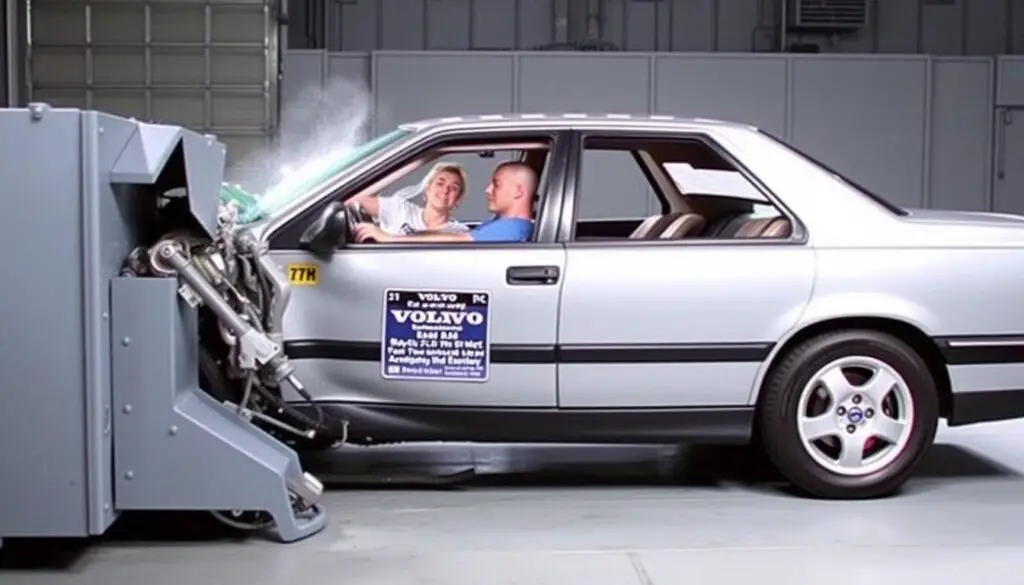
The true measure of any safety system is its performance in real-world crash scenarios. Volvo’s extensive crash investigation program has provided valuable data on the effectiveness of the SIPS side-impact safety system in the Volvo 850 and subsequent models.
Injury Reduction Statistics
Research studies have shown remarkable improvements in occupant safety with the introduction of SIPS:
- 54% reduction in MAIS2+ injuries with the introduction of the structural SIPS system
- 61% reduction in MAIS2+ injuries with the addition of the SIPSbag
- 72% reduction in MAIS2+ injuries with further refinements to the system
- 73% reduction specifically in AIS2+ head injuries compared to pre-SIPS vehicles
These statistics represent real lives saved and serious injuries prevented. The effectiveness of SIPS has been particularly notable in severe side impact scenarios, where the system’s ability to maintain passenger compartment integrity while absorbing impact energy has proven crucial.
“The SIPS system represents one of the most significant advancements in automotive safety design, with measurable reductions in injury severity across multiple body regions in side impact collisions.”
What makes these results particularly impressive is that they were achieved through a holistic approach to safety design rather than simply adding airbags. The fundamental structural improvements of SIPS provided the foundation for the system’s effectiveness, with supplemental restraint systems enhancing protection further.
Industry Impact: How SIPS Changed Automotive Safety Standards
The introduction of the SIPS side-impact safety system in the Volvo 850 had far-reaching implications for the entire automotive industry. Its innovative approach to side impact protection catalyzed changes in safety regulations, testing protocols, and competitor designs.
Regulatory Influence
Following Volvo’s lead, safety regulators worldwide began to place greater emphasis on side impact protection:
- FMVSS 214: The US side impact protection standard was enhanced in 1993
- Euro NCAP: Introduced side impact testing in 1997, partially influenced by SIPS performance
- Global NCAP programs: Adopted increasingly stringent side impact requirements
These regulatory changes forced all manufacturers to improve their side impact protection systems, raising the safety standard across the industry. What began as a Volvo innovation became a universal requirement.
Competitor Response
Following Volvo’s introduction of SIPS, other manufacturers quickly began developing their own side impact protection systems:
- BMW: Introduced the Inflatable Tubular Structure (ITS) in 1997
- Mercedes-Benz: Developed enhanced door beam structures
- Other manufacturers: Rapidly adopted side airbags and improved structural designs
By the early 2000s, side impact protection had become a standard consideration in vehicle design across all market segments. The competitive advantage that SIPS initially provided to Volvo had transformed into an industry-wide safety improvement.
Evolution of SIPS: From the 850 to Modern Volvos
Since its introduction in the Volvo 850, the SIPS side-impact safety system has undergone continuous refinement and enhancement. Each generation has built upon the success of its predecessor while incorporating new technologies and addressing emerging safety challenges.
Key Evolutionary Milestones
- Generation I (1991): Initial SIPS structural system introduced in the Volvo 850
- Generation II (1994): Addition of the SIPSbag side airbag system
- Generation III (1998): Introduction of the Inflatable Curtain (IC) for head protection
- Generation IV (2006+): Advanced sensor systems, dual-chamber airbags, and seat belt pretensioner activation in side impacts
The most significant enhancement came with the introduction of the Inflatable Curtain (IC), which extended protection to the head area – one of the most vulnerable body regions in side impacts. This system deployed from the roof lining, covering the side windows to protect both front and rear occupants.
Modern Volvo vehicles incorporate further refinements, including:
- Advanced sensor fusion: Combining multiple sensor inputs for more precise deployment decisions
- Pre-crash detection: Systems that can prepare safety features before impact occurs
- Integrated safety approach: SIPS working in concert with other safety systems for comprehensive protection
These evolutionary improvements have maintained Volvo’s leadership position in side impact protection while addressing the changing nature of crash scenarios and vehicle designs.
SIPS Maintenance and Service Considerations
Owners of Volvo 850 models and other vehicles equipped with the SIPS side-impact safety system should be aware of important maintenance considerations to ensure the system remains fully functional throughout the vehicle’s life.
Safety Precautions During Service
When working on or around the front seats of SIPS-equipped vehicles, special precautions are necessary:
- Safety clip installation: Always install the orange safety clip (located under the seat side pocket) before performing any work near the sensor
- Avoid sensor impact: The pyrotechnic sensor can deploy if struck with sufficient force, even without electrical power
- Proper procedures: Follow manufacturer service procedures when removing or installing seats
The SIPSbag deployment is extremely powerful and can cause serious injury if accidentally triggered during maintenance. The safety clip is specifically designed to prevent unintentional deployment by blocking the firing mechanism.
Warning: Never work on or around SIPS-equipped seats without first installing the safety clip. Accidental deployment can cause serious injury and hearing damage due to the explosive force and sound.
System Inspection
While the SIPS system does not have a diagnostic warning light like the front SRS airbag system, periodic inspection is recommended:
- Visual inspection: Check for damage to seat sides where the SIPSbag is housed
- Structural integrity: After any collision, have the SIPS structural components inspected
- Professional assessment: If the SRS warning light illuminates, have the entire restraint system checked
The original Volvo documentation indicated a service interval for the SIPS system, but subsequent technical bulletins extended this to the lifetime of the vehicle based on extensive testing and field experience.
Owner Experience: Living with SIPS in the Volvo 850

For owners of the Volvo 850 and other SIPS-equipped vehicles, the side impact protection system represents a significant but largely invisible safety benefit. Unlike some safety features that affect the driving experience, SIPS operates silently in the background, ready to activate only when needed.
Ownership Insights
- Peace of mind: Many owners cite enhanced confidence when driving in heavy traffic
- Minimal intrusion: The system’s integration into the vehicle structure means no compromise in interior space
- Long-term reliability: The mechanical nature of the SIPSbag sensor means it remains functional even in older vehicles
- Value retention: SIPS-equipped Volvos often maintain better resale value due to their safety credentials
“The SIPS system in my 850 has been completely maintenance-free for over 25 years. It’s reassuring to know this pioneering safety technology continues to protect my family even as the car ages.”
For many Volvo enthusiasts, the SIPS system represents part of the brand’s commitment to safety innovation – a tangible example of engineering that prioritizes occupant protection above all else. This legacy continues to influence purchasing decisions even decades after the system’s introduction.
Does the SIPS system require periodic maintenance?
Originally, Volvo recommended inspection at specific intervals, but technical bulletins later extended this to the lifetime of the vehicle. No routine maintenance is required, though visual inspection after any collision is recommended.
How can I tell if my Volvo 850 has the SIPSbag system?
Vehicles equipped with SIPSbag will have a “SIPS” or “SIPSbag” label on the outboard side of the front seat backrests. Additionally, all 850 Turbo models from 1995 onward came standard with the system, while it was optional on non-turbo models initially.
Will the SIPSbag deploy in minor collisions?
The SIPSbag is calibrated to deploy only in significant side impacts. The system requires the deformed door to hit the sensor with a speed of approximately 2 m/s (6.6 ft/sec) to activate, which helps prevent unnecessary deployments in minor incidents.
The Legacy of SIPS: Volvo’s Continuing Safety Leadership

The SIPS side-impact safety system introduced in the Volvo 850 represents more than just a single innovation – it embodies a philosophy of safety design that continues to influence vehicle development today. Its legacy extends far beyond the specific technical solution to encompass a holistic approach to occupant protection.
Enduring Principles
Several key principles established by SIPS continue to guide safety development:
- Real-world safety focus: Designing for actual crash scenarios rather than just regulatory tests
- Integrated systems approach: Viewing the entire vehicle as a safety system rather than adding isolated features
- Continuous improvement: Evolving designs based on crash data and technological advances
- Proactive innovation: Addressing safety challenges before regulatory requirements mandate them
These principles have led to Volvo’s Vision 2020 initiative – a commitment that no one should be killed or seriously injured in a new Volvo car by 2020. This ambitious goal represents the natural evolution of the safety philosophy that produced SIPS.
Today’s Volvo vehicles incorporate advanced driver assistance systems, pre-crash preparation features, and sophisticated structural designs that all trace their conceptual lineage back to innovations like SIPS. The side impact protection system in the 850 wasn’t just a feature – it was the beginning of a safety revolution that continues to save lives today.
Conclusion: SIPS as a Defining Moment in Automotive Safety
The introduction of the SIPS side-impact safety system in the Volvo 850 represents a watershed moment in automotive safety history. By addressing one of the most challenging aspects of occupant protection, Volvo established new benchmarks that would eventually transform industry standards worldwide.
The system’s effectiveness is demonstrated not just in laboratory tests but in real-world crash statistics that show substantial reductions in injury severity across multiple body regions. This data-driven validation underscores the value of Volvo’s approach to safety innovation.
Perhaps most importantly, SIPS exemplifies how engineering excellence focused on human protection can create lasting change. What began as a unique selling point for one manufacturer has become a universal expectation, with side impact protection now standard across virtually all vehicle segments.
As automotive technology continues to evolve toward autonomous driving and new mobility concepts, the principles established by innovations like SIPS remain relevant. The commitment to protecting vehicle occupants from harm, regardless of who is at fault in a collision, continues to guide safety development. In this way, the legacy of the SIPS side-impact safety system extends far beyond the Volvo 850 and into the future of transportation safety.