
This explainer previews how a legacy automaker plans to advance protection for U.S. drivers. From the three-point belt patent of 1959 to software-driven driver aids, the brand frames restraint and crash protection as evolving together.
Expect a mix of hardware and software upgrades across the lineup. The headline is a next-generation smart seatbelt debuting on the EX60 electric crossover, designed to improve via over-the-air updates and to work with upgraded driver-assist systems for intersections, highway commutes, and tight parking-lot reversals.
This article sorts confirmed features from anticipated options, explains core system changes, and shows how choices may vary by trim and model. It will cover the brand’s safety DNA, the smart belt concept, core 2026 systems, model-by-model availability, and likely effects on crash ratings for real-world U.S. driving scenarios.
Key Takeaways
- Overview of confirmed and expected upgrades for U.S. drivers.
- How the smart seatbelt pairs with advanced driver-assist systems.
- Which systems aim to help at intersections, highways, and parking lots.
- Trim and model differences may affect final feature lists.
- Software updates play a growing role in post-delivery improvement.
Volvo’s Safety DNA Heading Into 2026 Models
A single invention in 1959 — the three-point safety belt — set a lasting standard for occupant protection. Engineer Nils Bohlin created the restraint and the company deliberately kept the patent open so other makers could adopt it. That decision frames a culture of shared research and broad adoption today.
The brand’s current approach groups work into three pillars:
- Prevention: camera and radar ADAS that aim to stop collisions before they occur.
- Protection: structural design, ultra-strong cages, and airbags that manage crash energy.
- Driver support: assist systems and alerts that reduce human error on busy roads.
Active systems focus on avoiding incidents; passive systems manage forces if a crash happens. Both matter on suburban arterials and high-speed highways across the United States.
Rather than one single feature, the program is a coordinated stack of sensors, software logic, and structure. The chief objective remains clear: reduce the chance of a crash first, then limit occupant loads when impact is unavoidable.
Smart Seatbelt Debut: The Biggest New Safety Story to Watch
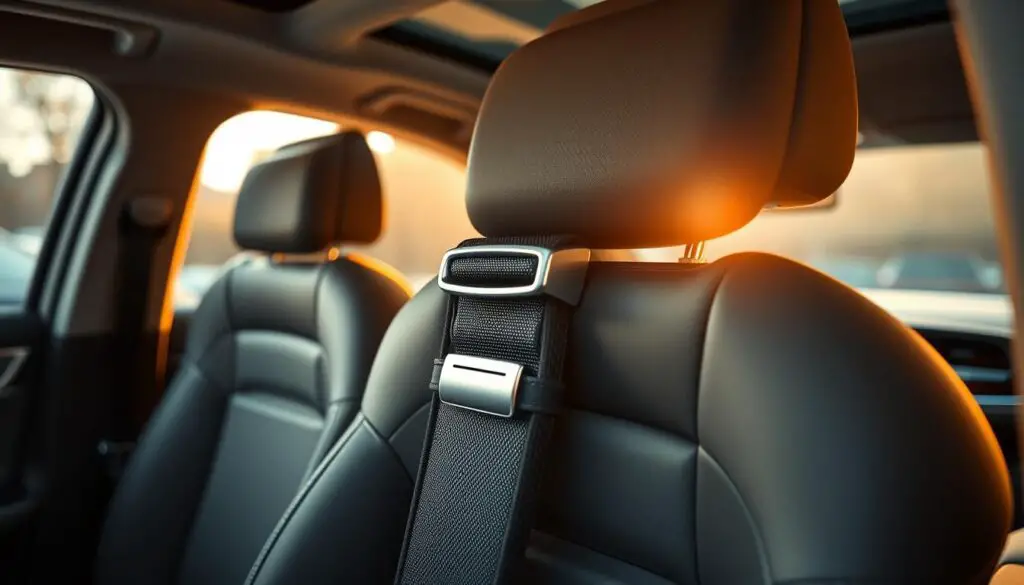
The shift from a fixed three-profile belt to a sensor-driven, software-updatable restraint marks a major step for occupant protection. This design treats the belt as an active system that responds to the person and the scene.
Load limiting here means the belt controls how much force is applied during a crash. Expanding from three to 11 adaptive profiles lets the system better match restraint force to different body sizes and seating positions. That reduces excess load for small passengers and adds needed control for larger occupants.
The vehicle uses interior and exterior sensors to measure height, weight, body shape, and seating position. External sensing adds road context so the belt can factor in speed, angle, and likely crash dynamics rather than treating every event the same.

Over-the-air updates are built into the design so algorithms can refine restraint logic over time as more crash and near-crash data arrive. The system debuts on the EX60 electric crossover and carries a patent co-owned with ZF Lifetec, a detail that supports broader industry scaling.
What new safety technologies will Volvo implement in 2026 models?
A layered approach mixes forward-facing sensors with reinforced structure to lower crash risk and injury. The package separates active crash avoidance from crash protection so each vehicle gets both prevention and mitigation tools.
City Safety and detection coverage
City Safety uses cameras, radar, and lidar to scan ahead and spot oncoming hazards during turns. It includes intersection support that can detect oncoming vehicles and apply braking for a collision if needed.
The system tracks cars, pedestrians, cyclists, and large animals to suit both urban streets and darker rural roads.
Driver alerts and intervention
Escalation follows a clear path: audio and visual warnings, brake‑pedal vibration, then emergency braking if the driver does not respond. Some trims add emergency steering assistance to avoid imminent impact.
Pilot Assist and vision aids
Pilot Assist pairs adaptive cruise control and stop‑and‑go traffic capability with gentle steering input to center the vehicle in its lane. Night visibility improves with automatic high‑beam LED headlights and mirror cameras that feed a blind spot information system.
Rear and structural protections
Cross Traffic Alert with Auto Brake scans rearward when reversing and can brake for cars, cyclists, and pedestrians. The body uses an ultra‑high‑strength steel cage, crumple zones, and advanced airbags that factor occupant position and belt use.
WHIPS whiplash protection and run‑off road mitigation add another layer by managing rear impacts and by steering or brake support to keep speed and direction under control.
Optional Safety Technology by Model: XC40, XC60, and XC90
Optional packages let buyers pick targeted upgrades that match daily routes and driving style. Options vary by trim, so shoppers should compare feature bundles rather than assuming all systems are standard.
XC40 options
Volvo XC40 buyers can add a 360-degree camera for bird’s-eye views that improve low-speed awareness around curbs, pedestrians, and tight parking spots.
Park Assist Pilot steers into parallel and perpendicular places while the driver controls throttle and brake, lowering the risk of minor impacts during maneuvers.
Run-off Road Mitigation is an optional layer that issues alerts and applies steering or brakes if the vehicle drifts off narrow or dark roads.
XC60 upgrades
Volvo XC60 offers Four‑C adaptive chassis sensors that track speed, yaw, pitch, and roll to help stabilize handling across changing road surfaces.
Optional air suspension raises ride height for clearance or lowers it for better aerodynamics and control at speed — useful on wet or rough roads.
Enhanced road sign recognition blends camera reads with map navigation data to reinforce posted limits and reduce missed-sign errors.
XC90 premium options
Volvo XC90 buyers can select a head‑up display that keeps speed, navigation cues, and collision warnings in the driver’s line of sight.
The Bowers & Wilkins audio system can route directional alerts to specific speakers, helping drivers locate hazards by sound source.
For shoppers seeking broad coverage, bundled ADAS packages combine many optional systems into a single order to simplify configuration and ensure feature compatibility.
- Tip: Confirm which options are grouped in packages—mixing single items across trims may not always be possible.
What This Means for Drivers: Safety Performance, Confidence, and Ratings Outlook
New coordination among restraint, sensors, and driver aids aims to make everyday trips less risky and more predictable.
How these systems reduce collision risk in real traffic
Layered systems use early warnings, automated braking, and lane control to cut collision chance in stop‑and‑go traffic and at busy intersections.
Pilot Assist eases workload by holding speed and following distance. That lowers fatigue on long drives and helps preserve control when traffic is heavy.
Improved visibility and cross‑traffic monitoring reduce low‑speed mishaps during parking and reversing. Structural upgrades and adaptive airbags focus on cabin integrity if an impact occurs.
Ratings context and what shoppers should expect
Official IIHS and NHTSA scores are pending. Historically, the brand has earned Top Safety Pick+ and five‑star marks, so competitive performance is likely.
“Predictability and early intervention matter most; systems that warn sooner and act faster reduce real-world harm.”
| Area | Expected Outcome | Driver Benefit |
|---|---|---|
| Assist & Alerts | Faster detection | More reaction time |
| Restraint & Cabin | Lower occupant loads | Reduced injury risk |
| Visibility & Rear Aids | Fewer low-speed collisions | Safer parking |
Practical note: Ratings depend on specific tests and trim equipment, so check IIHS and NHTSA releases as vehicles reach dealers.
Conclusion
This generation pairs sensor-guided belts with layered driver aids so routine trips face fewer risks.
Key advances center on a smart seatbelt with 11 adaptive profiles and OTA updates, tighter coordination among City Safety and Pilot Assist, and reinforced cabin design that acts as the last line of defense.
Core features — collision avoidance, lane support, blind‑spot monitoring, and reversing aids — translate to real gains for daily commutes and parking maneuvers in an American car owner’s life.
Compare optional packages across XC40, XC60, and XC90 when shopping; equipment varies by trim and affects final protection. Official ratings arrive with testing, but the brand’s history keeps expectations high as these 2026 volvo offerings reach the road.
FAQ
What are the headline occupant-restraint changes for the 2026 lineup?
Volvo introduces an adaptive seatbelt system that expands load-limiting profiles from the traditional three to as many as eleven. The belt uses interior sensors and exterior inputs to tailor tension, pre-tensioning, and load distribution to occupant size, seating position, and crash scenario. Over-the-air software updates refine those profiles after launch.
How does the updated collision-avoidance suite handle intersections and turning vehicles?
The collision-avoidance package now includes intersection support that monitors crossing and turning trajectories. It combines camera, radar, and lidar-class sensor fusion to predict potential conflicts, issue layered warnings, and apply emergency braking when the system judges a collision imminent.
Which road users are covered by the detection systems?
Detection coverage extends to vehicles, pedestrians, cyclists, and larger animals. The multi-sensor array improves recognition in low light and complex urban scenes, reducing false positives while ensuring timely intervention for vulnerable road users.
What forms of driver alert and intervention are used before braking is applied?
The systems deliver audio and visual cues, seat or brake-pedal vibration feedback, and progressive steering nudges. If the driver doesn’t respond, the system escalates to autonomous emergency braking to avoid or mitigate impact.
What capabilities does Pilot Assist offer in 2026 cars?
Pilot Assist provides adaptive cruise with stop-and-go function and enhanced lane-centering steering input. It supports longer periods of assisted driving on highways and integrates tighter steering corrections for smoother lane stays, while requiring driver supervision.
How has night and lateral visibility been improved?
Vision enhancements include automatic high-beam LED headlights with adaptive beam patterns and an upgraded blind spot information system. These features work with camera and radar inputs to illuminate hazards earlier and warn of vehicles in adjacent lanes.
Is reversing safer with the new systems?
Yes. Cross Traffic Alert now includes Auto Brake when reversing in crowded areas. The system detects approaching vehicles, cyclists, and pedestrians and will intervene if the driver doesn’t react to warnings.
What structural and passive protections were upgraded for 2026?
Volvo reinforced its safety cage with additional ultra-high-strength steel and refined crumple zones to better manage collision energy. Advanced airbag logic adapts deployment timing and force based on occupant data from the seatbelt and interior sensors.
Are whiplash and run-off road risks addressed?
Yes. WHIPS whiplash protection is updated with improved seat and head restraint geometry. Run-off road mitigation works with steering and braking inputs to reduce the likelihood of leaving the roadway and minimize impact forces if a departure occurs.
Which optional packages are offered across XC40, XC60, and XC90?
The XC40 can be optioned with a 360-degree camera, Park Assist Pilot, and Run-off Road Mitigation. The XC60 offers Four-C adaptive chassis sensors, optional air suspension, and enhanced road sign recognition. The XC90 adds premium options such as a head-up display, directional safety alerts through the premium audio system, and bundled advanced driver-assistance packages.
How will these updates affect real-world crash risk and ratings?
The combined active and passive upgrades aim to lower collision frequency and severity across urban and highway driving. Given Volvo’s history with IIHS Top Safety Pick+ and strong NHTSA results, these enhancements are expected to preserve or improve safety ratings for 2026 models.