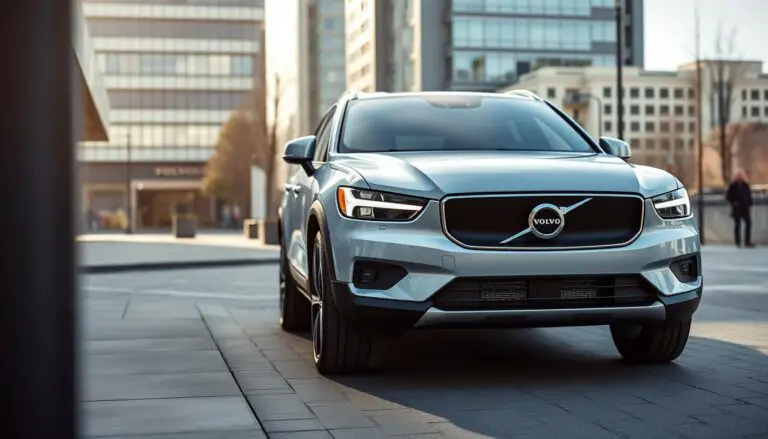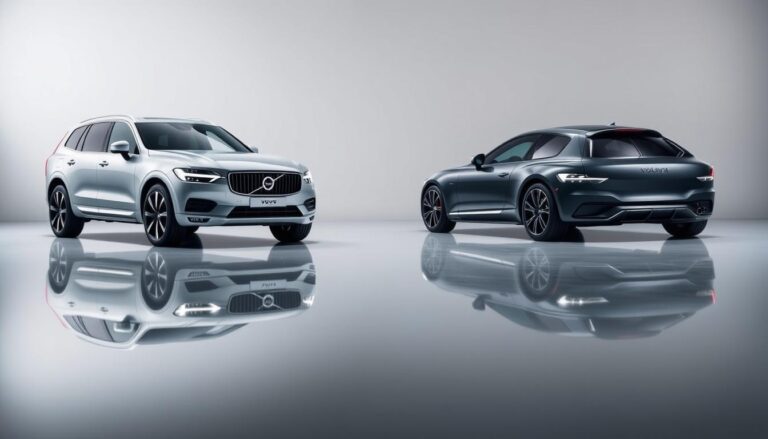

This introduction explains what the roof-mounted lidar sensor aims to do for the EX90 and why that matters for buyers weighing premium three-row electric SUVs.
We focus on real-world use, not spec sheets. That means looking at sensor strategy, driver assistance philosophy, software maturity, and ownership value when features actually work today.
Pricing and position matter. The EX90 enters the U.S. market as a safety-first luxury three-row suv with a simplified trim plan and a starting price under $80,000. Rivian R1S, BMW iX, Mercedes EQS SUV, and Tesla Model X frame the comparison set.
Early testing from Consumer Reports noted some units arrived unfinished and that lidar on initial builds runs in a learning mode until later updates enable full functions. This gap between hardware presence and active features affects day-to-day safety and confidence behind the wheel.
Use this guide to see what truly matters for daily driving: detection, driver monitoring, interface stability, and consistent safety outcomes. Later sections will detail independent testing, activation timing, and why that timing changes how systems stack up.
Key Takeaways
- The roof-mounted sensor is meant to improve detection and reduce blind spots.
- Hardware can be present while full features remain disabled until software updates.
- Price positions the EX90 as a safety-focused luxury three-row option.
- Independent testing shows early units may need further tuning.
- Compare systems by real-world usability, not just sensor counts.
Volvo EX90 LiDAR and “Safe Space Technology” in the context of driver assistance
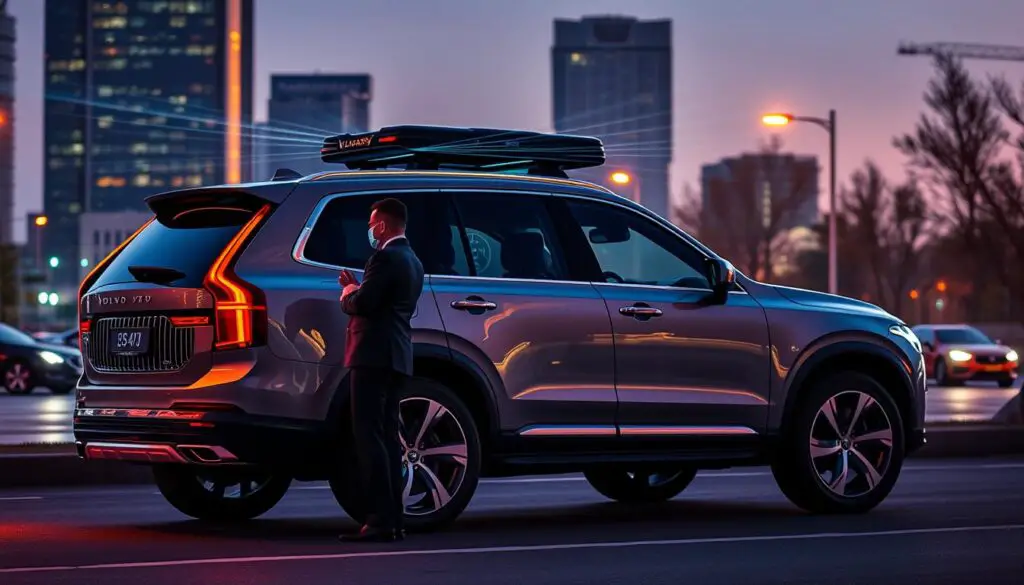
Safe Space Technology bundles sensors and software to prioritize occupant protection in real driving. That package pairs roof-mounted lidar with cameras, radar, and driver monitoring to reduce reliance on any single sensor type.
What lidar adds to detection and safety goals
Practical gains: lidar gives precise distance measurement and clearer object edges at night or in low contrast. This can improve pedestrian detection and collision avoidance when cameras struggle.
Result: earlier hazard recognition, more reliable classification, and enhanced support for adaptive cruise and lane centering functions. Note that early units ran a learning mode, so real-world benefit depends on active software.
Pilot Assist and driver monitoring in a safety-first approach
Pilot Assist sits above basic assistance as a workload reducer for highway driving. It blends adaptive cruise, lane centering, and brief lateral help while keeping the driver responsible.
Driver monitoring matters because it enforces safe use. It prompts or limits assistance when attention drops. That coordination—monitoring, emergency braking, curve speed control, and lane change aid—shows Safe Space as a coordinated set of systems, not a single headline feature.
| Component | Primary Role | Practical Benefit |
|---|---|---|
| Roof lidar | Depth and object detection | Better night/low-contrast pedestrian recognition |
| Cameras & radar | Classification and motion tracking | Lane marking reading and speed-based tracking |
| Driver monitoring | Attention and misuse prevention | Safer engagement of assistance features |
| Pilot Assist | Highway driver assistance | Reduced workload while driver remains responsible |
How does Volvo’s LiDAR technology in the EX90 compare with competitors?
Sensor counts tell a partial story; practical use and activation timelines tell the rest.

EX90 vs BMW iX
Value and options: ex90 positions safety as standard with fewer trim tiers, while iX relies on option packages near a higher base price (~$85,000). That affects perceived cost-to-feature value for driver assistance.
Driver-assist tone: Volvo favors conservative, monitored engagement. BMW markets a luxury assist feel but often ties advanced functions to option packs.
EX90 vs Mercedes‑Benz EQS / EQS SUV
Mercedes aims for premium tech and refinement at a higher price (~$96,000). Yet real-world activation timelines matter: hardware alone won’t deliver consistent daily aids until software matures.
“Hardware presence does not equal immediate functionality.”
EX90 vs Rivian R1S
R1S emphasizes performance (up to ~750 hp) and adventure use. Volvo stresses stable safety systems for family duty. For three-row buyers, consistent assistance often beats peak output for daily peace of mind.
EX90 vs Tesla Model X
Tesla sells autonomy branding and an aggressive update cadence. Practical control and predictable lane support matter more for many drivers than marketing around self-driving capability.
Beyond lidar: ownership and range lens
Range and daily use: ex90’s ~300-mile range and competitors’ similar numbers mean true ownership differences come from UI stability, driver aids, and charging options.
Bi-directional charging: Volvo includes this feature as a real-world value add—powering devices, emergency load, and extra utility—while rival models cited here do not. That expands use cases and shifts the cost‑to‑value point for buyers.
- Pricing matters: ex90 under $80k vs rivals at higher points affects equipment parity.
- Systems conservatism: Volvo prioritizes monitored, conservative assist behavior.
- Software timing: activation delays reduce short-term safety gains even when hardware exists.
| Model | Price band (USD) | Performance (hp) | Notable edge |
|---|---|---|---|
| ex90 | Under $80,000 | ~496 | Bi-directional charging, safety-first systems |
| BMW iX | ~$85,000 | ~500 | Luxury options strategy |
| Mercedes EQS SUV | ~$96,000 | ~516 | Premium tech expectations, later activation risk |
| Rivian R1S | ~$70,000 | Up to ~750 | Performance focus |
What the latest real-world testing suggests about EX90 LiDAR readiness and software stability
A recent round of hands-on tests shows software maturity, not just sensor fitment, decides what owners actually get day one. Early units from consumer testing arrived with several active issues inside the first 1,000 miles.
“Learning mode” and delayed activation: what early owners can and can’t use right now
Learning mode means the roof sensor is present but many active-safety benefits tied to it are not yet available. Buyers should expect limited driver assistance related to that sensor until later software enables full functions.
Reported software and usability problems that affect confidence
Consumer Reports logged safety-blocking items: an airbag warning that stayed on for days and an SOS/crash notification that failed until updated. Unpredictable blind‑spot alerts and a rare charge failure also appeared.
Infotainment and audio faults matter for safety too. Screen failures can disable climate controls and key card features, degrading basic driving comfort and attention.
Why over-the-air updates are both a fix and a risk
OTA updates can repair major faults (an update cleared one airbag warning), but timing matters. Shoppers compare what works now, not promises. Verify activation status, current software version, and available features at delivery.
| Issue | Impact on driver | Short-term remedy |
|---|---|---|
| Learning-mode sensor | Limited active-safety benefits | Confirm activation schedule at purchase |
| Airbag/SOS faults | Direct safety concern | Immediate dealer/OTA fix required |
| Infotainment failures | Loss of controls, distraction risk | Software patch or repair |
Conclusion
For buyers, what matters most is predictable driving behavior and which systems are enabled at delivery.
The car’s roof sensor and Safe Space approach promise stronger detection and family-focused safety. Yet real-world value depends on active software and reliable controls, not just kit on the roof.
In short: the volvo ex90 brings notable design, three-row practicality, bi-directional charging, and a lidar-forward safety story. That combination improves its market point, but short-term gains hinge on stable updates and activation timing.
Checklist before you buy: confirm lidar status, current software version, Pilot Assist behavior, driver monitoring comfort, and any delayed features. These items shape the day-to-day driving experience more than small range or performance differences.
Choose the model that matches your tolerance for tech arriving over time versus a vehicle with mature systems at hand. That trade-off will determine long-term cost and confidence behind the wheel.
FAQ
What role does LiDAR play alongside Safe Space Technology and driver assistance in the EX90?
Sensor fusion combines radar, cameras, and lidar to build a precise 3D view around the SUV. That layered approach helps detect pedestrians, cyclists, and vehicles in low light and complex scenes. Safe Space Technology uses those inputs plus driver monitoring to prioritize collision avoidance and automated steering interventions while keeping the human driver responsible for supervision.
What detection and safety benefits does lidar add for an electric three-row SUV?
Lidar extends reliable range and improves object classification in cluttered environments. For a family-focused SUV, that means earlier warnings for crossing pedestrians and clearer separation of static versus moving objects near highways or parking areas. The result is reduced false brakes and better lane-centering in mixed traffic.
How do Pilot Assist and driver monitoring fit into this safety-first strategy?
Pilot Assist provides lane keeping and adaptive cruise support, while inward-facing cameras and sensors watch attention and hand presence. If the driver becomes unresponsive, the system escalates alerts and can reduce speed or pull the car toward a safe stop. Together they form a supervisory loop rather than full autonomy.
How does the EX90’s sensor strategy compare to the BMW iX?
BMW relies more on camera-and-radar combinations and software tuning for driver aids, emphasizing driving dynamics and luxury feel. The EX90 adds lidar for denser, long-range 3D mapping, prioritizing redundancy and safety over purely performance-oriented features. That can mean smoother detection in complex urban settings versus BMW’s refined control feel.
How does the EX90 stack up against Mercedes‑Benz EQS and EQS SUV on tech availability and activation?
Mercedes markets advanced driver assistance but often staggers feature activation by region and regulatory approval. The EX90’s lidar hardware is present at launch, yet some functions may enter a learning or delayed-activation phase via software. Both brands balance ambitious systems with phased rollouts tied to testing and certification.
What are the main differences versus the Rivian R1S regarding safety priorities?
Rivian emphasizes off-road capability and performance while offering robust safety suites. The EX90 focuses more heavily on urban collision avoidance with lidar and a structured driver-supervision model. For buyers, that means Volvo prioritizes predictable detection and family safety over extreme terrain features.
How does the EX90 compare to Tesla Model X when it comes to autonomy branding and everyday driving control?
Tesla markets full-self-driving capability more aggressively, relying mainly on cameras and radar historically. The EX90 presents a conservative, safety-centric approach: lidar-backed sensing, explicit driver monitoring, and features designed for supervised assistance. For daily driving, that often results in fewer marketing claims and more measurable, redundancy-driven safeguards.
Beyond sensing, how do features like bi-directional charging affect overall ownership value?
Bi-directional charging adds real-world utility—home backup power and load balancing—raising practical value for owners. When combined with strong safety hardware and regular software updates, these energy features can improve total cost of ownership and daily convenience compared with rivals that lack vehicle‑to‑grid capabilities.
What does real-world testing say about the EX90’s lidar readiness and software stability?
Early tests show the hardware delivers solid detection but highlight that some driver-assist features run in a learning mode or ship with limited functionality until further validation. Reviewers note occasional software glitches in menus and sensor calibration that can affect perceived maturity, though many expect OTA fixes.
What limitations should early owners expect from learning mode and delayed feature activation?
Owners may see reduced feature availability, conservative system behavior, or gradual performance improvements as the vehicle collects data and receives updates. That means some advanced assist functions might be restricted initially to ensure safety while algorithms mature under varied real-world conditions.
What software and usability issues have appeared in testing that influence confidence in safety systems?
Reports have cited sporadic UI lag, inconsistent alerts, and occasional sensor misalignments that trigger conservative system responses. While not catastrophic, these issues can reduce trust in hands-on supervision and highlight the need for timely software patches and clear owner guidance.
Which changes can over-the-air updates make, and why does timing matter when comparing systems?
OTA updates can refine perception models, expand feature sets, and tune control logic. Timing matters because systems that receive regular, validated updates can improve substantially after launch, while competitors with slower or less effective update cycles may fall behind despite similar hardware.