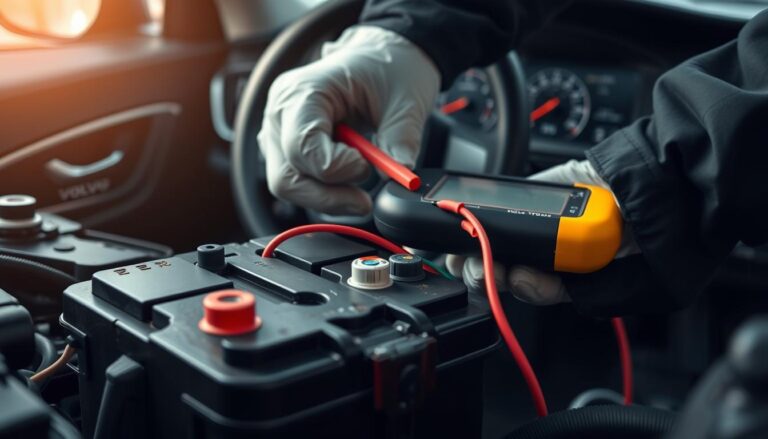

Experiencing stiff or sluggish turning can quickly turn safe driving into a risky situation. This introduction explains typical reasons a Volvo might lose hydraulic assistance and how small signs point to larger problems.
Low fluid, worn pumps, leaks at hoses or the steering rack, and slipping belts often show up first as whining or grinding when you turn the steering wheel.
Incorrect tire pressure or poor alignment can mimic system problems, so a quick wheel and tire check saves time and money before booking service.
We outline easy checks you can do today: view reservoir marks, inspect hoses for drips, and listen for unusual noises.
If contamination or pump wear is present, the issue can progress from a minor problem to full system failure fast.
Key Takeaways
- Low fluid and visible leaks are the most common early warning signs.
- Whining or grinding at the steering wheel often points to pump or contamination issues.
- Check reservoir levels, hoses, belts, and tire pressures before scheduling service.
- Tire and alignment faults can cause steering problems that mimic system failure.
- Address small symptoms quickly to avoid larger repairs and safety risks.
What are common causes of power steering failure of my Volvo?
A drop in hydraulic pressure can begin silently, then show up as a stiff wheel during parking maneuvers. Several mechanical and fluid issues produce similar symptoms, so matching sounds and visible signs helps pinpoint the culprit.
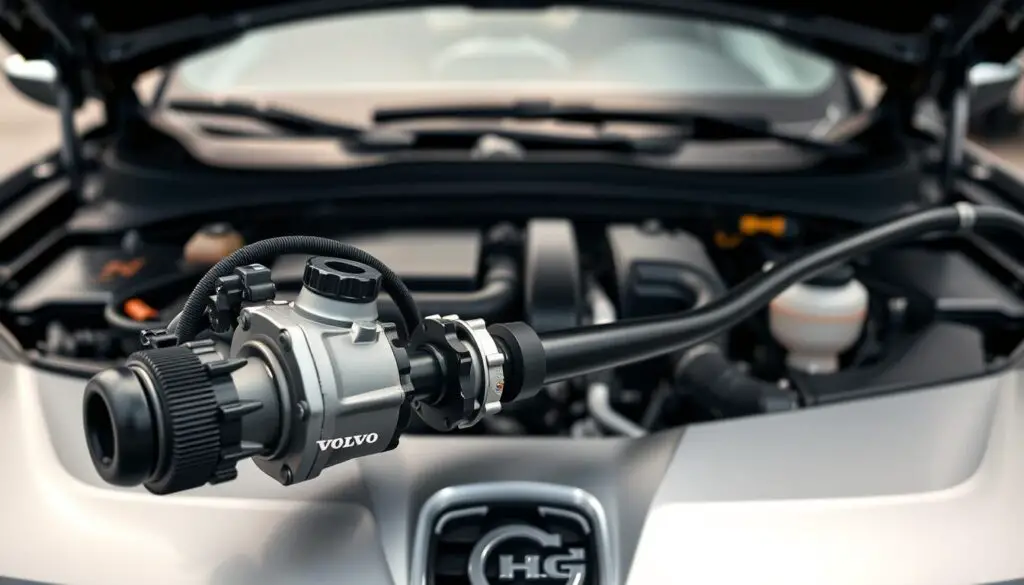
Low fluid and visible leaks
Low power steering fluid usually comes from hose, clamp, or rack seal leaks. Look for drips along lines and darkened spots under the car. Fluid color change signals contamination or aging that speeds wear.
Pumps, racks, belts and contamination
A failing power steering pump often whines when turning the steering wheel at low speeds and can grind as wear worsens. Steering rack seal failure or internal wear leads to dead spots and unresponsive volvo steering. A slipping serpentine belt will squeal and remove assistance instantly.
Air, contamination, and alignment
Air or dirty steering fluid reduces hydraulic pressure and makes the system noisy. A flush with the correct spec restores consistent assist. Also confirm tire pressure and alignment, since uneven tires can mimic system problems and lead to misdiagnosis.
- Pair noise type with visible leaks and belt checks to narrow diagnostics.
- Maintain proper fluid level and belt condition to prevent cascading failures.
How to diagnose power steering issues on your Volvo today
Begin every diagnosis at the reservoir: a quick fluid check reveals many steering faults early.

Check reservoir level and fluid condition
Read the min/max marks and note the fluid color and smell. Dark, burnt, or foamy fluid suggests contamination or air in the system.
If the level is low, top off only after you record how much was missing. A fast drop points to a leak rather than normal use.
Inspect for visible leaks
Trace hoses from the pump to the rack and feel fittings for dampness. Wet spots at clamps or the rack boot often mean a seal or line failure.
Listen while turning the steering wheel
With the engine idling, slowly move the wheel from center to lock. A steady whine often ties to the pump or low fluid, a squeal to a slipping belt, and grinding to severe wear.
Verify belt condition and tire checks
Check the serpentine belt for cracks or slack; a weak belt cuts pump output. Confirm tire pressures at the door-jamb spec and watch for a pull that points to alignment, not the steering system.
| Symptom | Likely cause | Quick action |
|---|---|---|
| Whine when turning | Low fluid or failing power steering pump | Check level; top off and note loss amount |
| Squeal at startup | Worn or loose belt | Inspect belt; adjust or replace |
| Wet boots or undercarriage | Hose, fitting, or rack leak | Document location and contact Volvo Cars service |
Document findings — fluid levels, noise type, belt condition, and any wet areas — so technicians can diagnose faster during service.
Quick fixes and maintenance to restore safe Volvo steering
Simple steps—checking levels, belts, and hoses—frequently bring back normal steering function. Start with easy checks and small repairs before you book service.
Top off with the correct fluid and monitor for drops
Use only the manufacturer-specified power steering fluid. Fill to the level mark, run the vehicle, and recheck fluid levels after a few drives.
If the level falls steadily, a leak likely exists and topping off only masks the issue.
When to replace a worn pump or damaged belt
If whining or heavy effort continues after fluid and belt checks, the power steering pump may be worn.
Replace a failing pump to restore pressure and protect other parts. Also replace cracked or loose serpentine belts to prevent sudden assist loss.
Schedule service for rack concerns, flushes, and persistent leaks
Persistent wetness at the rack ends or steady wander suggests seal damage. Book Volvo Cars service for steering rack inspection and repair.
A full flush removes air and contamination, restoring consistent assist on models including mild-hybrid and the Volvo EX90. Log each repair so future diagnostics are faster.
| Action | When to do it | Benefit |
|---|---|---|
| Top off fluid to level mark | Low level, dark fluid, or after repair | Quick restore of assist; reveals persistent leaks |
| Replace pump or belt | Continued noise, loss of assist, visible belt wear | Restores pressure and prevents breakdown |
| Flush system | Aerated or contaminated fluid | Improves feel and extends part life |
| Service rack seals | Wet boots, leaking at rack, steering wander | Prevents total rack failure and unsafe handling |
Conclusion
Keep checks simple and timely. A quick look at the reservoir, hoses, and belt separates minor wear from an urgent steering issue. Regular checks catch low fluid, leaks, and a failing pump before they worsen.
Record what you top off and any parts you replace. That history speeds future diagnostics and prevents needless labor. For hybrid models, follow battery-safe steps and torque specs when working around accessory drives.
If noise, vibration, or a wandering wheel continues, move to targeted repairs — belt, pump, flush, or rack work — or book professional diagnostics. For related troubleshooting, see a short guide on the Volvo V70 start/die guide.
FAQ
What can cause low power steering fluid or leaks in hoses, seals, or the steering rack?
Leaks often start at worn hoses, deteriorated seals, or the steering rack. Road salt, age, and heat can degrade rubber lines and O‑rings. Minor drips may become larger, lowering the reservoir level and reducing hydraulic assistance. Inspect under the vehicle and around the reservoir for wet spots, and check fluid color and level regularly.
How does a failing power steering pump show up, and what about warning noises when turning the wheel?
A worn pump usually makes whining, groaning, or grinding sounds when you turn the wheel, especially at low speeds. Noise often indicates internal wear or low fluid. If the pump begins to fail, you may notice heavier steering effort or intermittent assistance. Prompt diagnosis prevents damage to the rack and other components.
What role does the steering rack play, and how do internal seal issues cause unresponsive steering?
The steering rack converts steering wheel input into wheel movement. Internal seals maintain hydraulic pressure; when they leak or wear, the rack loses efficiency and can feel loose or unresponsive. Contaminated or low fluid accelerates seal wear, so address rack symptoms quickly to avoid costly replacement.
Can a drive or serpentine belt slip or break cause sudden loss of assistance?
Yes. The power assist pump often relies on the engine belt. If the belt slips, becomes glazed, or breaks, the pump stops delivering pressure and steering becomes heavy. Inspect belt condition and tension during routine service and replace per Volvo’s intervals or at first sign of wear.
How does air or contamination in the power steering fluid reduce system pressure?
Air in the lines causes foaming and reduces hydraulic pressure, producing a spongy or inconsistent steering feel. Contaminants like metal particles or dirt damage pump bearings and seals. Flushing the system and using the correct Volvo‑specified fluid restores performance and prevents premature part failure.
Could tire pressure or alignment problems mimic steering system issues?
Yes. Low tire pressure, uneven wear, or poor alignment can make the steering pull, feel heavy, or vibrate—symptoms similar to hydraulic faults. Always confirm correct tire pressures and a one‑wheel pull test before replacing steering components.
How do I check fluid level and condition in the reservoir?
Park on level ground, let the engine reach operating temperature if recommended, then read the reservoir’s min/max marks. Healthy fluid is typically clear to amber; dark or burnt‑smelling fluid signals contamination. Use only the Volvo‑approved fluid type stamped in the owner’s manual.
Where should I inspect for visible leaks around the pump, hoses, lines, and rack?
Look under the hood at hose connections, the pump body, and the reservoir. Underneath, check the steering rack, lines, and tie‑rod ends for wetness or pooling fluid. After a short drive, recheck for fresh drips to identify active leaks.
What do whining, squealing, or grinding while turning the wheel indicate?
These noises point to low fluid, air in the system, a failing pump, or belt issues. Whining often means low fluid or pump wear; squealing suggests belt slip; grinding implies internal component failure. Address noises quickly to avoid total loss of assistance.
How should I verify belt tension and wear that could impact the steering pump?
With the engine off, inspect the serpentine belt for cracks, glazing, or frayed edges. Press the belt mid‑span; it should have firm tension with minimal deflection per Volvo specs. Loose or damaged belts need immediate replacement to protect the pump and alternator.
When should I confirm tire pressures and check for alignment pull before deeper repairs?
Check tire pressure at least monthly and before diagnosing steering complaints. If one tire reads low or the car pulls to one side during a straight drive, correct pressures and re‑check. If problems persist, schedule an alignment to eliminate chassis causes before hydraulic repairs.
How often should I top off with the correct power steering fluid and monitor for drops?
Check fluid monthly and top to the reservoir’s max mark when needed. Repeated drops between checks indicate a leak that requires repair. Use the fluid specified in your Volvo owner’s manual to protect seals and pump life.
When is it time to replace a worn power steering pump or a damaged belt?
Replace the pump if it makes persistent noise, leaks from the housing, or fails to build pressure. Change a belt if it shows cracks, glazing, or tension loss. If steering effort increases suddenly, inspect the belt before removing the pump in case that fixes the issue.
When should I schedule service for rack concerns, fluid flushes, or persistent leaks?
Book service if you detect leaking fluid, steering wander, uneven play, or repeated fluid contamination. Technicians can pressure‑test the system, perform a full flush, and recommend rack rebuild or replacement when internal damage exists. Early intervention saves money and keeps driving safe.